
Rotator Cuff Injury Without Surgery
Rotator cuff injuries are a common problem that affects millions of people worldwide, often caused by repetitive motion, heavy lifting, or trauma. While some severe cases may require surgical intervention, many rotator cuff injuries can be treated effectively without surgery. If you’re experiencing pain or limited mobility in your shoulder, nonsurgical treatments may help you regain function and reduce discomfort. In this article, we’ll explore various nonsurgical approaches to healing a rotator cuff injury and restoring shoulder health.
1. Rest and Activity Modification
Rest is the initial and essential step in addressing a rotator cuff injury. Overusing your shoulder can aggravate the injury and delay healing. It’s crucial to stop any activity that causes pain or strain on your shoulder, such as heavy lifting or repetitive overhead movements. However, complete immobility isn’t always the answer. Gentle movements and stretching within a painfree range can prevent stiffness and help maintain mobility.
Activity modification is also important—finding ways to continue your daily activities without stressing the shoulder is key. For example, using your non injured arm to perform tasks or adjusting your posture and body mechanics can help prevent further injury.
2. Physical Therapy
One of the most effective nonsurgical treatments for rotator cuff injuries is physical therapy. A well structured rehabilitation program focuses on strengthening the muscles around the shoulder, improving flexibility, and restoring a full range of motion. A physical therapist can guide you through targeted exercises that not only support the rotator cuff but also improve posture and shoulder mechanics.
Exercises may include:
Pendulum swings: A gentle way to keep your shoulder mobile.
Resistance band exercises: Help strengthen the shoulder muscles without causing additional strain.
Stretching: Focuses on increasing flexibility in the shoulder and preventing muscle tightness.
Physical therapy is a gradual process, but with dedication, it can significantly improve the function of your shoulder.
3. Medications for Pain and Inflammation
Nonsteroidal anti inflammatory drugs (NSAIDs) like ibuprofen or aspirin are often recommended to reduce pain and inflammation associated with rotator cuff injuries. While these medications do not heal the injury, they can provide significant relief, making it easier for you to engage in physical therapy and other recovery activities.
It’s important to use these medications as directed by your healthcare provider to avoid side effects, especially with prolonged use. In some cases, your doctor may prescribe stronger pain relievers or even corticosteroid injections to provide temporary relief from pain and swelling.
4. Ice and Heat Therapy
Ice and heat therapy are simple yet effective methods to manage pain and inflammation. Applying ice minimizes swelling and numbs the affected area, offering quick relief post-injury. Apply an ice pack wrapped in a cloth to the injured area for 1520 minutes several times a day, especially after activity.
Heat therapy, on the other hand, increases blood flow and promotes healing. Applying a heating pad or taking warm showers can relax the muscles, reduce stiffness, and improve mobility. You may find it helpful to alternate between ice and heat depending on the stage of your injury.
5. Platelet Rich Plasma (PRP) Therapy
PRP therapy is a cuttingedge, nonsurgical treatment option for rotator cuff injuries. This therapy involves drawing a small amount of your blood, processing it to concentrate the platelets, and then injecting the plateletrich plasma into the injured area. Platelets contain growth factors that help accelerate tissue healing and reduce inflammation.
PRP therapy has demonstrated potential in promoting the healing of rotator cuff injuries, particularly when paired with physical rehabilitation. However, it may not be suitable for everyone, so it’s important to discuss this option with a specialist.
6. Steroid Injections
Steroid injections can provide shortterm relief from pain and inflammation, especially for patients with severe pain that inhibits their ability to participate in physical therapy. These injections are commonly administered when other conservative treatment methods have failed to provide sufficient relief. However, they should be used cautiously, as repeated injections may weaken the tendons over time.
Steroid injections are not a cure but can offer temporary relief while allowing you to engage in rehabilitative exercises and other treatments.
7. Alternative Therapies
Alongside standard treatments, some individuals experience relief by exploring alternative therapies such as:
Acupuncture: Helps reduce pain and promote healing by stimulating specific points in the body.
Massage therapy: Can release muscle tension and improve circulation in the affected shoulder area.
Chiropractic care: Focuses on improving joint function and alignment, which may relieve stress on the shoulder.
These therapies can complement traditional treatments, but it’s important to consult with your healthcare provider before trying any alternative approach.
8. Bracing and Shoulder Support
Wearing a shoulder brace or sling can help protect your rotator cuff during the healing process. Bracing provides stability and prevents further strain, especially during activities that might aggravate the injury. A properly fitted brace can enhance alignment and help minimize the chances of re-injury. However, prolonged use of braces without engaging in physical therapy can lead to muscle weakness, so it should be used as part of a broader treatment plan.
9. Gradual Return to Activity
As your shoulder begins to heal, it’s important to gradually return to your normal activities. Jumping back into strenuous tasks too soon can cause reinjury or slow down the healing process. Work closely with your physical therapist and healthcare provider to determine when it’s safe to increase activity levels. Follow a phased approach, starting with lowimpact activities and progressively increasing intensity as your shoulder regains strength and mobility.
Rotator cuff injuries can be painful and frustrating, but with the right approach, many people can recover without surgery. A combination of rest, physical therapy, medications, and alternative therapies can help you regain shoulder function and alleviate pain. Always consult with a healthcare professional before starting any treatment plan to ensure it is tailored to your specific needs.
Contact Dr. Vishal Sahni for Expert Care
If you are experiencing a rotator cuff injury and are looking for professional guidance on nonsurgical treatment options, contact Dr. Vishal Sahni, Orthopedic Surgeon and Shoulder Specialist. Dr. Sahni specializes in treating shoulder dislocations, rotator cuff injuries, and elbow conditions. As the Director at the London Orthopaedic Clinic, he is dedicated to providing personalized, highquality care to help you achieve a full recovery.
For more information or to schedule a consultation, reach out to:
Dr. Vishal Sahni
Orthopedic Surgeon & Shoulder Specialist Director, London Orthopaedic Clinic
Visit one of the leading orthopedic hospitals —Max Hospital, Kingsway Hospital, Shrikrishna Hrudalaya, Arihant Hospital or Neurospine Hospital—for a consultation with Dr. Vishal Sahni and start your journey to recovery today.
Whatsapp: +91 95295 52938
Address: Ground Floor, Berar House, Mehadia Square, Dhantoli, Nagpur, Maharashtra 440012, India
 Blog, Dr Vishal Sahni, Elbow, Elbow Treatment, Frozen Shoulder, Golfer’s elbow, Orthopedic Hospital, Shoulder and Upper Limb, Shoulder Dislocation, Shoulder Pain, Shoulder Replacement, Tennis Elbow, Treatments, Wrist, Wrist Fractures
 Shoulder pain is troubling, but what happens when your shoulder becomes so stiff that you cannot comb your hair, wear a shirt comfortably or reach behind your back? For many
 Dr Vishal Sahni, Elbow, Elbow Treatment, Frozen Shoulder, Golfer’s elbow, Orthopedic Hospital, Shoulder and Upper Limb, Shoulder Dislocation, Shoulder Pain, Shoulder Replacement, Tennis Elbow, Treatments, Wrist, Wrist Fractures
 You are playing cricket, badminton, football, tennis or working out at the gym when suddenly you feel pain. Maybe you twist your wrist, pull a shoulder muscle, hurt your elbow
 Blog, Dr Vishal Sahni, Elbow, Elbow Treatment, Frozen Shoulder, Golfer’s elbow, Hands and Wrists, Orthopedic Hospital, Shoulder and Upper Limb, Shoulder Dislocation, Shoulder Pain, Shoulder Replacement, Tennis Elbow, Treatments, Winter Joint Pain, Wrist, Wrist Fractures
 Your elbow looks like a simple joint. But every time you bend your arm, straighten it, lift a bag, use a computer mouse, play sport or even turn a door
 Blog, Dr Vishal Sahni, Elbow, Elbow Treatment, Frozen Shoulder, Golfer’s elbow, Hands and Wrists, Orthopedic Hospital, Shoulder and Upper Limb, Shoulder Dislocation, Shoulder Pain, Shoulder Replacement, Tennis Elbow, Treatments, Wrist, Wrist Fractures
 You may not notice your shoulder, elbow, wrist or hand when everything is working normally. You button your shirt. Pick up your phone. Comb your hair. Open a bottle. Carry
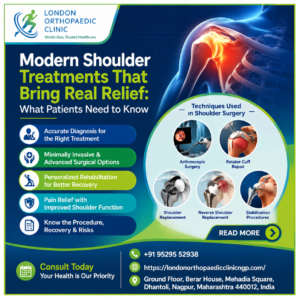 Blog
Blog Shoulder pain can quietly change your everyday life. A shirt that was easy to wear becomes difficult to button. Reaching for something on a shelf hurts. Sleeping on one side
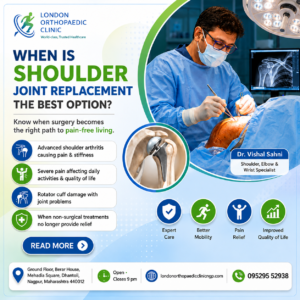 Blog, Dr Vishal Sahni, Elbow, Elbow Treatment, Frozen Shoulder, Golfer’s elbow, Hands and Wrists, Orthopedic Hospital, Shoulder and Upper Limb, Shoulder Dislocation, Shoulder Pain, Shoulder Replacement, Tennis Elbow, Treatments, Winter Joint Pain, Wrist, Wrist Fractures
 Persistent shoulder pain can slowly change your daily life. Simple activities such as combing your hair, wearing a shirt, reaching for something on a shelf, lifting a light object or
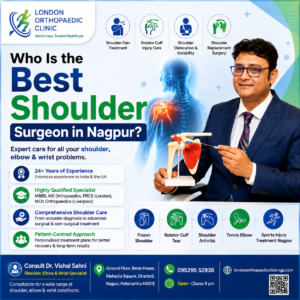 Dr Vishal Sahni, Elbow, Elbow Treatment, Frozen Shoulder, Goldic Therapy, Golfer’s elbow, Orthopedic Hospital, Shoulder Dislocation, Shoulder Pain, Shoulder Replacement, Tennis Elbow, Treatments, Winter Joint Pain, Wrist, Wrist Fractures
 If you are searching for the best shoulder surgeon in Nagpur, choosing the right specialist is an important decision. Shoulder pain, stiffness, dislocation, rotator cuff problems, arthritis and other shoulder
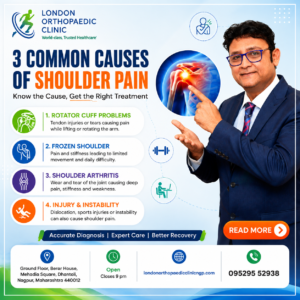 Blog, Dr Vishal Sahni, Elbow, Elbow Treatment, Frozen Shoulder, Golfer’s elbow, Hands and Wrists, Orthopedic Hospital, Shoulder and Upper Limb, Shoulder Dislocation, Shoulder Pain, Shoulder Replacement, Tennis Elbow, Treatments, Wrist, Wrist Fractures
 By Dr. Vishal Sahni – Shoulder, Elbow & Wrist Specialist, London Orthopaedic Clinic, Nagpur Have you ever wondered why two people can both say, “My shoulder is hurting,” but require
 Blog, Dr Vishal Sahni, Elbow, Elbow Treatment, Frozen Shoulder, Golfer’s elbow, Orthopedic Hospital, Shoulder Pain, Shoulder Replacement, Tennis Elbow, Treatments
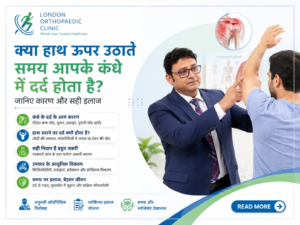
 क्या आपको हाथ ऊपर उठाते समय कंधे में दर्द होता है? क्या बालों में कंघी करते समय, कपड़े पहनते समय, ऊंची shelf से सामान निकालते समय या कोई overhead काम
 Blog, Dr Vishal Sahni, Elbow, Elbow Treatment, Frozen Shoulder, Golfer’s elbow, Neck Pain, Orthopedic Hospital, Shoulder and Upper Limb, Shoulder Dislocation, Tennis Elbow, Treatments, Wrist, Wrist Fractures
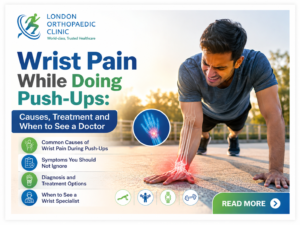
 Push-ups are one of the most common exercises for building strength in the chest, shoulders, arms and upper body. They can be done at home, in a gym or almost
 Blog, Dr Vishal Sahni, Elbow, Elbow Treatment, Frozen Shoulder, Golfer’s elbow, Hands and Wrists, Orthopedic Hospital, Shoulder Pain, Shoulder Replacement, Tennis Elbow, Treatments, Wrist, Wrist Fractures
 5 Effective Exercises to Help Relieve Shoulder Pain and Improve Movement Shoulder pain can make even simple daily activities difficult. Reaching for something on a shelf, combing your hair, wearing
 Elbow, Elbow Treatment, Frozen Shoulder, Golfer’s elbow, Tennis Elbow, Treatments, Wrist
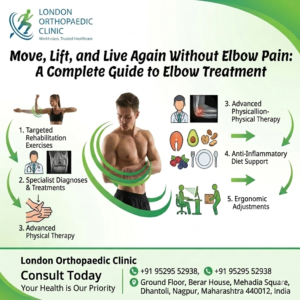
 A glass of water. A laptop bag. A grocery bag. A cricket bat. A dumbbell. Even opening a door or shaking hands. We use our elbows for many simple movements