From ‘Ouch! to ‘Ahh!’ – A Shoulder Pain Comeback Story’
There is a moment many people with shoulder pain know very well.
You reach for something on a high shelf — “Ouch!”
You try to wear a shirt — “Ouch!”
You turn in bed and accidentally sleep on the painful side — “Ouch!”
You raise your arm to comb your hair, drive your car, play a sport or lift a bag — and suddenly a simple movement has become a daily challenge.
Then comes another thought:
“Will my shoulder ever feel normal again?”
The good news is that shoulder pain does not always have to become a permanent part of your life. With the right diagnosis, appropriate treatment and a carefully planned recovery programme, many people can improve their shoulder movement, strength and quality of life.
But the first step is understanding why your shoulder is hurting.
For patients looking for shoulder pain treatment in Nagpur, a specialist evaluation can help identify whether the problem is related to a rotator cuff injury, frozen shoulder, shoulder arthritis, instability, dislocation, tendon problem, sports injury or another condition.
At London Orthopaedic Clinic, Nagpur, Dr. Vishal Sahni focuses on shoulder, elbow and wrist conditions and provides treatment based on the individual patient’s diagnosis, lifestyle and functional needs.
The Shoulder: A Small Joint With a Big Job
Your shoulder is involved in much more of your daily life than you may realise.
Think about everything you do with your arms:
Getting dressed
Combing your hair
Reaching for a shelf
Driving
Lifting a child
Carrying a bag
Working at a desk
Exercising
Playing sports
Sleeping comfortably
The shoulder has a very wide range of movement. That flexibility allows you to move your arm in many directions, but it also means that several muscles, tendons, ligaments, bones and other structures have to work together.
The rotator cuff, for example, is a group of muscles and tendons that helps move and stabilise the shoulder. Problems involving these structures can cause pain, weakness and difficulty raising the arm.
This is why shoulder pain is not a diagnosis by itself.
The real question is:
What is causing your shoulder pain?
When “Just a Little Pain” Starts Affecting Your Life
Shoulder problems often begin quietly.
Perhaps you notice discomfort after exercise.
Maybe your shoulder hurts after lifting something heavy.
You may initially feel pain only when reaching overhead.
Some people notice pain while sleeping.
Others develop stiffness slowly and realise that they cannot move their arm as freely as before.
Because the pain may initially be manageable, many people simply wait.
They try home remedies.
They reduce activity.
They take pain medicines occasionally.
They hope it will disappear.
Sometimes shoulder pain does improve with appropriate conservative care. But persistent pain, weakness or restricted movement deserves proper assessment. Shoulder problems can have different causes, and treatment depends on identifying the underlying problem.
“Why Does My Shoulder Hurt?”
There is no single answer.
Shoulder pain may develop because of:
1. Rotator Cuff Problems
Rotator cuff injuries can occur because of an acute injury, repetitive use or age-related changes.
A patient may experience:
Pain while lifting the arm
Pain at night
Weakness
Difficulty reaching overhead
Difficulty performing everyday activities
Some patients can be treated without surgery, while selected tears may require surgical treatment.
If you are searching for rotator cuff tear treatment in Nagpur, a detailed clinical assessment is important before deciding whether physiotherapy, medication, injections or surgery is appropriate.
2. Frozen Shoulder
Frozen shoulder can be particularly frustrating.
The problem is not only pain. Stiffness becomes a major part of the condition.
You may find it difficult to:
Raise your arm
Reach behind your back
Wear clothes
Comb your hair
Reach overhead
Sleep comfortably
Frozen shoulder can last for months, and sometimes longer, but appropriate treatment can help manage pain and restore movement. Treatment may include pain management, exercises, physiotherapy and, in selected cases, other specialist interventions.
For people looking for afrozen shoulder specialist in Nagpur, early assessment can help establish the stage and severity of the condition and guide the next step.
3. Shoulder Arthritis
Like other joints, the shoulder can develop arthritis.
Cartilage damage and joint degeneration may result in:
Pain
Stiffness
Reduced movement
Difficulty performing daily activities
Pain during certain shoulder movements
For patients with advanced joint damage, shoulder arthritis treatment in Nagpurmay include non-surgical options initially. In selected patients with severe arthritis and significant functional limitation, shoulder replacement may become an option.
4. Shoulder Dislocation and Instability
A shoulder dislocation occurs when the upper arm bone comes out of its normal position in the shoulder socket.
It can happen during sports, falls, accidents or other injuries.
A suspected dislocation should not be treated by trying to put the shoulder back into position yourself. Urgent medical assessment is important.
For recurrent instability or certain structural injuries, specialist treatment may be required.
A sudden fall, gym injury, cricket injury, throwing activity or contact sport can damage the shoulder.
Athletes are not the only people at risk.
A person may injure the shoulder while:
Lifting luggage
Falling from a bike
Moving furniture
Exercising without proper preparation
Performing repetitive overhead work
If pain continues after an injury, consulting a sports injury doctor in Nagpur or shoulder specialist can help determine whether there is damage that requires treatment.
The Turning Point: Getting the Right Diagnosis
This is where the shoulder pain comeback story can change.
Instead of asking:
“How can I temporarily reduce the pain?”
the more useful question is:
“What is actually causing my shoulder pain?”
A specialist may assess:
Where the pain is located
Which movements cause pain
Shoulder range of motion
Muscle strength
Joint stability
Previous injuries
Work and sports activities
Duration of symptoms
Night pain
Functional limitations
Depending on the clinical findings, imaging such as an X-ray, ultrasound or MRI may be recommended.
Importantly, not every person with shoulder pain needs an operation or even extensive imaging. Clinical examination remains an important part of diagnosis, and imaging is selected according to the suspected condition.
This is why searching online for a diagnosis should not replace an examination by an orthopaedic specialist.
Treatment Is Not Always About Surgery
One of the biggest concerns patients have is:
“Doctor, will I need surgery?”
The answer is: not necessarily.
Treatment depends on the condition.
For many shoulder problems, treatment may begin with non-surgical approaches such as:
Activity modification
Appropriate medicines when prescribed
Physiotherapy
Shoulder-specific exercises
Strengthening
Mobility exercises
Injections in selected cases
Lifestyle modifications
The objective is not simply to remove pain for a few days.
The goal is to improve movement, strength and function while addressing the underlying problem.
However, if a structural problem is severe or conservative treatment does not provide adequate improvement, surgery may be considered.
When Arthroscopic Shoulder Surgery May Be Considered
Arthroscopic shoulder surgery in Nagpur is a minimally invasive approach used for selected shoulder problems.
During arthroscopy, a small camera is introduced into the joint through small incisions. Specialised instruments can then be used to diagnose and treat certain conditions.
Depending on the diagnosis, arthroscopic procedures may be used for problems involving:
Rotator cuff tears
Labral injuries
Shoulder instability
Selected ligament injuries
Certain cartilage problems
Other structural shoulder conditions
The decision to perform surgery should be based on the patient’s symptoms, examination, imaging findings, functional requirements and response to previous treatment.
The purpose of minimally invasive surgery is not simply to make a smaller cut. It is to use an appropriate technique for an appropriate problem.
When Shoulder Replacement Surgery May Become an Option
For some patients, the shoulder joint becomes severely damaged because of arthritis, complex injury or other conditions.
When pain and loss of function become significant, and other treatment options are no longer providing adequate relief, shoulder replacement surgery in Nagpur may be considered.
Depending on the patient’s condition, different types of shoulder replacement procedures may be appropriate.
One such procedure is reverse shoulder replacement surgery in Nagpur.
Reverse shoulder replacement changes the mechanics of the shoulder joint and can be useful in selected patients, particularly when the rotator cuff is severely damaged along with advanced joint problems.
But shoulder replacement is not a treatment that should be chosen simply because a scan shows arthritis or a patient has pain.
A proper assessment is required to understand:
The condition of the joint
Rotator cuff function
Bone quality
Age and activity level
Pain severity
Functional limitations
Previous treatment
Overall health
The right operation for one patient may not be the right treatment for another.
Shoulder Ligament Repair and Other Advanced Procedures
Shoulder injuries can involve more than bones.
Ligaments, tendons and cartilage can also be damaged.
For selected patients, shoulder ligament repair surgery in Nagpur may be considered when there is a significant structural injury causing instability or functional problems.
Similarly, minimally invasive procedures may be considered for suitable patients after a detailed assessment.
The principle should always be:
Diagnose first. Treat the actual problem. Choose surgery only when it is appropriate.
The Comeback Does Not End in the Operating Room
This is one of the most important parts of shoulder recovery.
Even after successful treatment, recovery is a process.
A patient may need:
Guided physiotherapy
Gradual strengthening
Mobility exercises
Activity modification
Follow-up examinations
A progressive return to work or sport
Trying to do too much too soon can interfere with recovery.
At the same time, avoiding movement completely for too long can contribute to stiffness in some shoulder conditions.
That is why rehabilitation should be tailored to the diagnosis and procedure.
The recovery plan after treatment for frozen shoulder will not be the same as the rehabilitation programme after rotator cuff repair or shoulder replacement.
What Does a Real Shoulder Comeback Look Like?
A successful shoulder comeback is not necessarily about waking up one morning with zero pain.
It may happen in small steps.
First, you sleep better.
Then you can raise your arm a little higher.
You can wear your shirt without struggling.
You can reach a shelf.
You can drive more comfortably.
You regain strength.
You return to exercise.
Eventually, you stop thinking about your shoulder throughout the day.
That is the real goal of treatment:
to help your shoulder become part of your life again — instead of the problem controlling your life.
Why Choosing a Shoulder-Focused Specialist Matters
When patients search for an orthopedic surgeon near me, they may find many doctors.
But shoulder problems can be complex.
A specialist focused on the shoulder and upper limb deals regularly with conditions involving the shoulder, elbow and wrist.
Dr. Vishal Sahni is an orthopaedic surgeon specialising in shoulder, elbow and wrist treatments.
His qualifications include:
MBBS, MS ORTHO, FRCS ORTHO (London), MCh ORTHO (Liverpool).
The official London Orthopaedic Clinic profile describes Dr. Sahni as an internationally experienced shoulder and upper-limb surgeon, with extensive UK experience and a focus on specialised orthopaedic care.
For patients looking for a shoulder specialist in Nagpur, shoulder surgeon in Nagpur, or shoulder joint specialist in Nagpur, a focused consultation can help clarify the cause of pain and the treatment options available.
More Than Just Shoulder Care
Although this story is about shoulder pain, Dr. Vishal Sahni’s specialist practice also covers conditions affecting the elbow and wrist.
Patients may seek consultation for:
Tennis elbow
Golfer’s elbow
Elbow arthritis
Elbow injuries
Elbow stiffness
Elbow arthroscopy
Elbow joint replacement
Wrist pain
Wrist injuries
Sports injuries
Carpal tunnel-related problems
For example, someone searching for tennis elbow treatment in Nagpur or an elbow pain doctor in Nagpur may require a very different treatment plan from a patient with a shoulder rotator cuff tear.
Similarly, wrist pain treatment in Nagpur depends on whether the pain is caused by an injury, tendon problem, ligament injury, nerve compression, arthritis or another condition.
This broader upper-limb expertise is important because pain around the shoulder, arm, elbow and wrist can sometimes overlap.
A Specialist for Patients Across Central India
London Orthopaedic Clinic Nagpur also serves patients who travel from different parts of Central India for specialised orthopaedic consultation.
Patients may come from Jabalpur, Bhopal, Raipur, Seoni, Chhindwara, Wardha, Amravati, Chandrapur, Yavatmal and other parts of Maharashtra, Madhya Pradesh and Chhattisgarh.
Online consultation is also available for patients who cannot immediately travel to Nagpur.
The clinic’s focus on shoulder and upper-limb conditions makes it a destination for patients looking for specialised orthopaedic evaluation rather than general advice alone.
When Should You Stop Waiting and See a Specialist?
You should consider professional assessment if shoulder pain:
Continues instead of improving
Keeps returning
Disturbs your sleep
Makes daily activities difficult
Causes significant stiffness
Causes weakness
Limits your ability to raise the arm
Started after a fall or significant injury
Is associated with swelling or other concerning symptoms
After a significant injury, particularly when you cannot move the arm or the shoulder looks deformed, urgent medical assessment is important because a fracture or dislocation may be present.
Do not ignore persistent pain simply because you can still manage your daily activities.
Early evaluation does not automatically mean surgery.
Sometimes, it simply means understanding the problem and choosing the right treatment before it becomes more complicated.
Your Shoulder Comeback Starts With One Decision
The journey from “Ouch!” to “Ahh!” is different for every patient.
For one person, it may mean physiotherapy.
For another, it may mean medication and activity modification.
For someone with frozen shoulder, restoring movement may be the main priority.
For a patient with a rotator cuff tear, specialised treatment may be required.
For advanced arthritis, shoulder replacement may eventually be considered.
And for an athlete, the priority may be returning safely to sport.
There is no single shoulder treatment that is right for everyone.
The right treatment begins with the right diagnosis.
If shoulder pain is stopping you from sleeping, working, exercising or enjoying everyday activities, consider speaking with a qualified shoulder specialist rather than continuing to live with the pain.
Dr. Vishal Sahni MBBS, MS ORTHO, FRCS ORTHO (London), MCh ORTHO (Liverpool)
Specialist in Shoulder, Elbow & Wrist Treatments
At London Orthopaedic Clinic, patients can receive evaluation and treatment for shoulder injuries, rotator cuff tears, frozen shoulder, shoulder arthritis, shoulder dislocation, shoulder replacement requirements, tennis elbow, wrist problems and sports injuries.
The clinic’s published information also highlights minimally invasive orthopaedic procedures, shoulder and upper-limb care, joint replacement and sports injury treatment.
If you are searching for shoulder pain treatment in Nagpur, the best doctor for shoulder pain in Nagpur, a shoulder specialist in Nagpur, or an experienced upper limb surgeon in Nagpur, the first step is a proper consultation.
Your shoulder does not have to remain the joint you are always protecting.
With the right diagnosis, appropriate treatment and a personalised recovery plan, the goal is to help you move with greater comfort and confidence again.
Frequently Asked Questions About Shoulder Pain
1. What is the most common cause of shoulder pain?
Shoulder pain can have many causes, including rotator cuff problems, frozen shoulder, arthritis, tendon inflammation, shoulder instability, previous injury and overuse. The exact cause cannot be confirmed from symptoms alone. A proper examination by a shoulder specialist can help identify the problem.
2. When should I see a shoulder specialist for shoulder pain?
You should consider seeing a shoulder specialist if pain continues, keeps returning, affects your sleep, limits arm movement, causes weakness, or makes daily activities difficult. You should also seek medical evaluation after a significant fall, accident or sports injury.
3. Who is the best doctor for shoulder pain in Nagpur?
The right doctor depends on the cause and severity of your shoulder problem. A shoulder-focused orthopaedic surgeon can assess conditions such as rotator cuff tears, frozen shoulder, shoulder arthritis, instability and shoulder injuries and recommend appropriate treatment.
4. What treatments are available for shoulder pain in Nagpur?
Treatment depends on the diagnosis. It may include activity modification, medicines prescribed by a doctor, physiotherapy, exercises, injections in selected cases, or surgery when appropriate. Not every shoulder problem requires surgery.
5. Does every rotator cuff tear require surgery?
No. Some rotator cuff tears can be managed with non-surgical treatment, depending on the patient’s symptoms, tear characteristics, activity level and functional requirements. Surgery may be considered for selected patients with significant symptoms or certain types of tears.
6. What is rotator cuff tear treatment in Nagpur?
Rotator cuff tear treatment may involve physiotherapy, activity modification, medication or other non-surgical measures. Some patients may require arthroscopic rotator cuff repair. The appropriate treatment depends on the type and extent of the tear and the patient’s symptoms and functional needs.
7. How is frozen shoulder treated?
Frozen shoulder treatment may include pain management, mobility exercises and physiotherapy. In selected patients, additional treatments or procedures may be considered. Treatment is usually planned according to the severity and stage of the condition.
8. How long does frozen shoulder take to recover?
Frozen shoulder can take several months to improve, and recovery varies between individuals. Consistent treatment and appropriate exercises can help restore movement. If stiffness or pain is significantly affecting daily life, a frozen shoulder specialist should evaluate the condition.
9. What is arthroscopic shoulder surgery?
Arthroscopic shoulder surgery is a minimally invasive surgical technique in which a small camera and specialised instruments are inserted through small openings around the shoulder. Depending on the problem, it can be used for selected rotator cuff, instability, labral and other shoulder conditions.
10. When is shoulder replacement surgery needed?
Shoulder replacement may be considered when the shoulder joint is severely damaged and pain and loss of function significantly affect the patient’s quality of life, particularly when appropriate non-surgical treatment has not provided sufficient improvement. The decision requires a detailed orthopaedic assessment.
11. What is reverse shoulder replacement surgery?
Reverse shoulder replacement is a type of shoulder replacement in which the normal ball-and-socket arrangement of the shoulder is reversed. It may be useful for selected patients with certain combinations of severe arthritis and rotator cuff damage. It is not suitable for every patient with shoulder pain.
12. Can shoulder arthritis be treated without surgery?
Yes. Depending on the severity of arthritis, treatment may include activity modification, appropriate medicines, physiotherapy, exercises and other non-surgical measures. When arthritis becomes advanced and causes significant pain and functional limitation, shoulder replacement may be considered.
13. What should I do if my shoulder comes out of its joint?
A suspected shoulder dislocation requires prompt medical assessment. Do not try to force the shoulder back into position yourself. A doctor can assess the injury and determine whether there is associated damage to bones, nerves or other structures.
14. Can shoulder pain be caused by a sports injury?
Yes. Falls, throwing activities, weight training, contact sports and repetitive overhead movements can cause different shoulder injuries. A sports injury doctor can assess the injury and recommend an appropriate treatment and rehabilitation plan.
15. Can shoulder pain affect sleep?
Yes. Several shoulder conditions can cause pain while sleeping, particularly when lying on the affected side. Persistent night pain should not simply be ignored, especially when it is accompanied by weakness or restricted shoulder movement.
16. Can physiotherapy help shoulder pain?
Physiotherapy can be useful for many shoulder conditions, but the exercises should match the diagnosis. Exercises that are helpful for one condition may not be appropriate for another. A doctor or physiotherapist can guide you regarding suitable exercises and progression.
17. When does shoulder pain require surgery?
Surgery may be considered when there is a significant structural problem, symptoms remain despite appropriate non-surgical treatment, or the injury or joint damage is likely to benefit from an operation. The decision should be based on examination, imaging, symptoms and individual patient needs.
18. Can I consult a shoulder specialist in Nagpur online?
Yes. London Orthopaedic Clinic provides online consultation options. Online consultation can be useful for discussing symptoms and previous reports, although some conditions may still require an in-person examination and physical assessment.
19. Does Dr. Vishal Sahni treat elbow and wrist problems too?
Yes. Dr. Vishal Sahni specialises in shoulder, elbow and wrist conditions. His clinical areas include shoulder injuries, rotator cuff problems, frozen shoulder, shoulder replacement, tennis elbow, elbow conditions, wrist pain and sports injuries.
20. Where can I consult Dr. Vishal Sahni in Nagpur?
Dr. Vishal Sahni consults at London Orthopaedic Clinic, Ground Floor, Berar House, Mehadia Square, Dhantoli, Nagpur, Maharashtra 440012.
A dislocated shoulder can be extremely painful and frightening. It usually happens when the upper arm bone comes out of the shoulder socket following a fall, accident, sports injury or sudden force. If the shoulder looks deformed, the arm cannot be moved normally, or there is severe pain after an injury, medical assessment should not…
Arm pain with weakness can make simple activities such as lifting a bag, combing your hair, dressing, reaching overhead or playing sports difficult. While many people assume the problem is only muscle pain, the actual cause may involve the shoulder joint, rotator cuff, elbow, wrist, nerves or an injury. If you are searching for an…
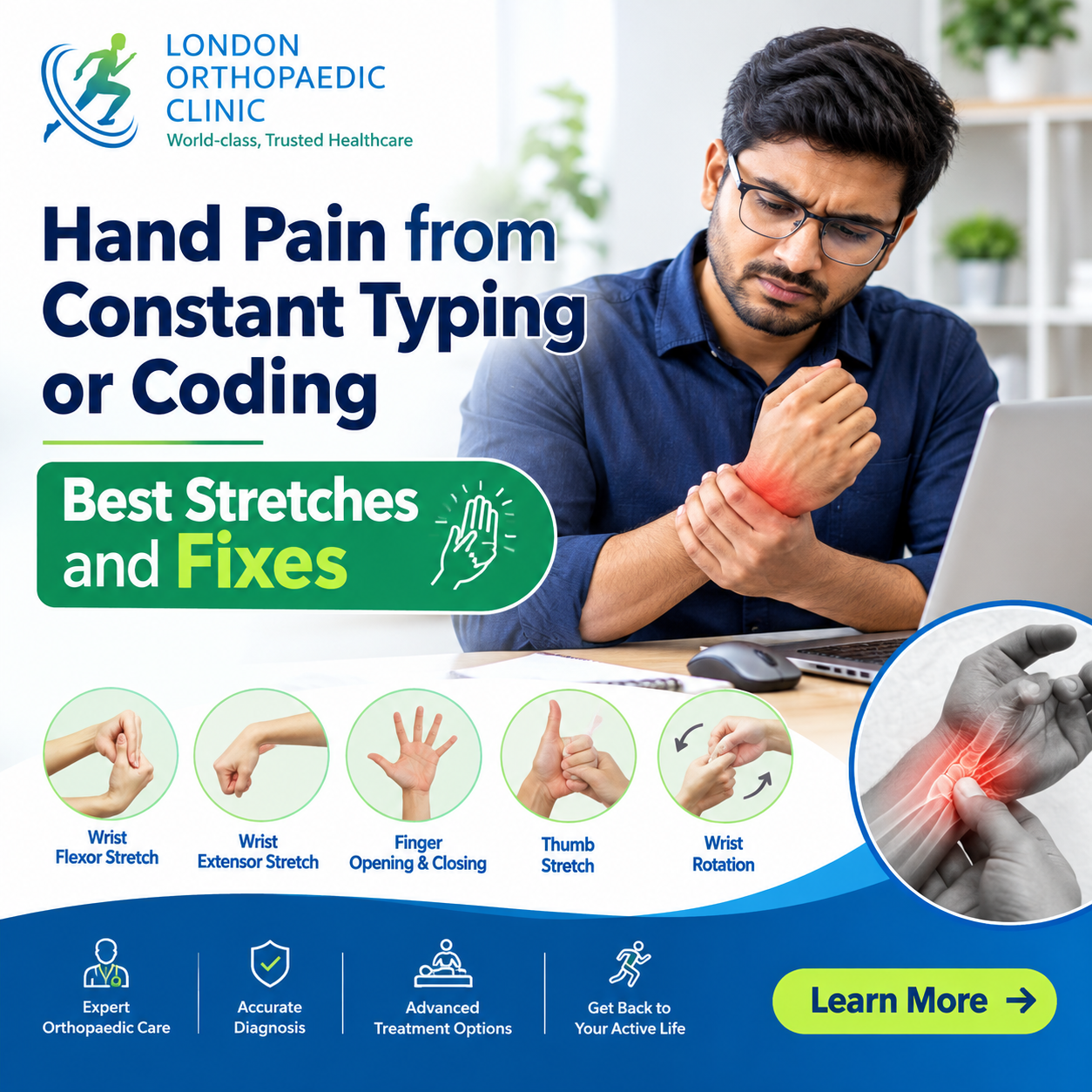
If you spend several hours every day typing, coding, using a mouse, designing, writing emails or working on a computer, you may gradually notice hand pain, wrist pain, finger stiffness or discomfort in the forearm. For many people, the problem starts as mild discomfort after a long working day. Over time, it may become more…