
Persistent shoulder pain can slowly change your daily life. Simple activities such as combing your hair, wearing a shirt, reaching for something on a shelf, lifting a light object or sleeping comfortably can become difficult. For some people, medicines, physiotherapy, activity modification and other non-surgical treatments provide good relief. But when the shoulder joint becomes severely damaged, these treatments may no longer provide enough improvement.
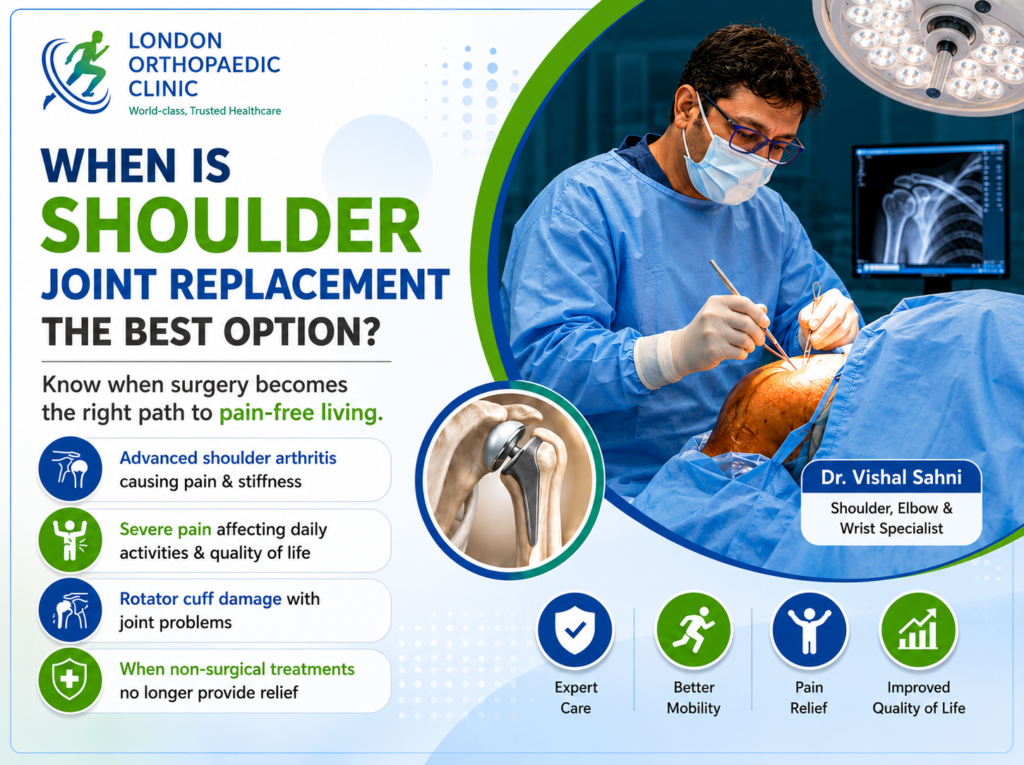
This is when a patient may start asking an important question:
“When is shoulder joint replacement the best option for my shoulder problem?”
Shoulder joint replacement is not automatically recommended just because a person has shoulder pain or arthritis. The decision depends on the cause of the pain, the condition of the shoulder joint, the rotator cuff, the patient’s age and activity level, the severity of joint damage and how much the condition is affecting everyday life.
A detailed evaluation by an experienced shoulder specialist in Nagpur can help determine whether shoulder replacement is appropriate or whether another treatment could provide better results.
At London Orthopaedic Clinic, Dhantoli, Nagpur, Dr. Vishal Sahni provides specialist assessment and treatment for complex shoulder, elbow and wrist conditions. His qualifications include MBBS, MS ORTHO, FRCS ORTHO (London), and MCh ORTHO (Liverpool), with extensive experience in India and the UK.
What Is Shoulder Joint Replacement?
The shoulder is a ball-and-socket joint. The rounded upper end of the arm bone forms the ball, while part of the shoulder blade forms the socket. Smooth cartilage normally covers these surfaces and allows the joint to move with minimal friction.

When the cartilage becomes severely damaged or disappears, movement can become painful. In advanced arthritis, the surfaces may become very irregular and the joint can become stiff and painful.
Shoulder replacement surgery involves removing damaged portions of the joint and replacing them with artificial components designed to restore joint movement and reduce pain.
There is more than one type of shoulder replacement. The most suitable procedure depends on the condition of the patient’s shoulder.
The American Academy of Orthopaedic Surgeons describes shoulder arthroplasty as a treatment option for conditions including shoulder arthritis and certain fractures. Different replacement designs are available, including total and reverse shoulder replacement.
This means that “shoulder replacement” is not one single operation for every patient.
When Is Shoulder Joint Replacement Considered?
Shoulder replacement is generally considered when there is significant structural damage to the shoulder and the patient continues to experience substantial pain or loss of function despite appropriate non-surgical treatment.
A patient may be considered for replacement when several of the following factors are present:
1. Severe Shoulder Arthritis
Advanced shoulder arthritis is one of the important reasons for considering shoulder replacement.
Arthritis can damage the cartilage covering the joint surfaces. As the cartilage becomes thinner or disappears, the joint may become painful and stiff.
Patients may notice:
- Persistent shoulder pain
- Pain while moving the arm
- Difficulty reaching overhead
- Reduced shoulder movement
- Pain at night
- Difficulty dressing
- Difficulty performing household activities
- Grinding or clicking sensations
- Increasing dependence on the other arm
When arthritis becomes advanced and the joint surfaces are severely damaged, shoulder replacement may provide better pain relief and function than treatments aimed only at managing symptoms.
AAOS notes that shoulder osteoarthritis can cause pain, stiffness and reduced movement, while imaging such as X-rays can help identify joint-space narrowing and other changes associated with arthritis.
For patients searching online for shoulder arthritis treatment Nagpur, it is important to understand that not every arthritis patient needs surgery. Early and moderate arthritis may often be managed without replacement. Surgery is considered when the severity of the condition and the patient’s symptoms justify it.
2. Shoulder Pain Is Affecting Everyday Life
The severity of shoulder disease is not judged only by an X-ray.
Your symptoms and your ability to use the arm are also important.
For example, a person may have significant pain while:
- Sleeping
- Putting on clothes
- Washing or combing the hair
- Reaching behind the back
- Reaching overhead
- Lifting everyday objects
- Driving
- Performing household work
- Working at a desk or workplace
If shoulder pain has started controlling your routine instead of you controlling your routine, it may be time for a specialist assessment.
A shoulder pain doctor in Nagpur can evaluate whether the problem is caused by arthritis, rotator cuff disease, frozen shoulder, instability, a previous injury or another condition.
The goal is not simply to perform surgery. The goal is to identify the correct diagnosis and select the least invasive treatment that can reasonably provide lasting improvement.
3. Non-Surgical Treatment Is No Longer Providing Enough Relief
Shoulder replacement is generally not the first treatment for most shoulder problems.
Depending on the diagnosis, a doctor may initially recommend appropriate non-surgical treatment. This can include medicines, activity modification, physiotherapy or other carefully selected treatments.
If symptoms remain severe despite appropriate management, surgery may become an option.
This is an important distinction.
Having shoulder pain does not automatically mean you need shoulder replacement.
Similarly, having an abnormal X-ray does not automatically mean surgery is required.
The decision should be based on the combination of:
- Symptoms
- Physical examination
- Imaging findings
- Shoulder function
- Rotator cuff condition
- Bone quality
- Previous treatments
- Overall health
- Personal activity requirements
Johns Hopkins Medicine similarly notes that shoulder replacement may be considered when significant shoulder damage causes symptoms and non-surgical options no longer provide the desired relief.
4. The Shoulder Joint Has Severe Bone and Cartilage Damage
One of the important signs that replacement may be appropriate is advanced damage to the joint surfaces.
In severe arthritis, the protective cartilage can become badly worn. The space between the ball and socket may become very narrow, and the joint can develop bone spurs and other structural changes.
This can lead to:
Pain + stiffness + loss of movement + reduced quality of life.
When these problems become severe, an orthopaedic specialist may discuss shoulder replacement as an option.
An X-ray is commonly an important part of the assessment. Depending on the suspected problem, additional imaging such as CT, MRI or ultrasound may also be useful for assessing the bones, rotator cuff and surrounding tissues.
5. A Previous Shoulder Injury Has Caused Permanent Joint Damage
Not all shoulder replacement patients develop their problem simply because of age.
A serious shoulder injury or fracture can permanently damage the joint.
For example, a complex fracture around the shoulder may damage the joint surface or affect the blood supply to the bone. In selected cases, reconstruction or other surgical treatment may be considered first. In other situations, shoulder replacement may be the more suitable option.
This is why patients with a history of major shoulder trauma should be assessed individually.
A person searching for shoulder injury treatment Nagpur may need a completely different treatment from someone with age-related shoulder arthritis.
6. A Severe Rotator Cuff Problem Has Damaged the Shoulder Joint
The rotator cuff is a group of muscles and tendons that helps stabilise and move the shoulder.
A large or irreparable rotator cuff tear can significantly affect shoulder function. In some patients, long-standing rotator cuff damage can be associated with advanced arthritis, a condition often referred to as cuff tear arthropathy.
In such selected cases, a reverse shoulder replacement surgery in Nagpur may be considered.
A reverse replacement changes the normal arrangement of the shoulder joint. Instead of reproducing the usual ball-and-socket arrangement, the implant changes the mechanics of the joint so that the deltoid muscle can contribute more significantly to shoulder elevation when the rotator cuff is not functioning adequately.
This is different from a conventional anatomic shoulder replacement.
Johns Hopkins notes that reverse shoulder replacement is mainly used in selected situations involving rotator cuff deficiency together with arthritis, while the appropriate implant depends on the patient’s individual condition.
Therefore, a patient should not decide between conventional and reverse replacement based only on an internet article.
The decision requires a specialist assessment.
Total Shoulder Replacement vs Reverse Shoulder Replacement
Understanding this difference is important for patients researching shoulder replacement surgery Nagpur.
Anatomic Total Shoulder Replacement
In an anatomic total shoulder replacement, the artificial components are designed to reproduce the normal arrangement of the shoulder joint.
This option may be considered when:
- The joint has significant arthritis
- The rotator cuff is functioning adequately
- The shoulder anatomy is suitable
- The patient’s symptoms are severe enough to justify replacement
The damaged ball and socket surfaces are replaced with artificial components.
Reverse Shoulder Replacement
In reverse shoulder replacement, the ball-and-socket configuration is reversed.
This can be useful in selected patients where the rotator cuff cannot adequately perform its normal function, particularly when there is associated joint damage.
It is commonly considered for conditions such as:
- Severe rotator cuff tear with arthritis
- Cuff tear arthropathy
- Selected complex fractures
- Certain failed previous shoulder replacement procedures
The exact indication must be determined by the treating shoulder surgeon.
This is why choosing an experienced shoulder joint specialist in Nagpur is important when a patient is being considered for replacement surgery.
What If You Have a Rotator Cuff Tear but No Severe Arthritis?
A rotator cuff tear does not automatically mean shoulder replacement.
This is an important point for patients.
Some rotator cuff tears can be treated with non-surgical management. Others may require repair, particularly when symptoms, tear characteristics and functional limitations indicate that surgery could be beneficial.
In suitable patients, arthroscopic shoulder surgery Nagpur may be considered for rotator cuff repair or other shoulder problems.
However, a very large irreparable tear combined with advanced arthritis is a different situation. In selected patients, reverse shoulder replacement may then be considered.
The correct treatment depends on the complete clinical picture rather than the MRI report alone.
What About Frozen Shoulder?
Frozen shoulder can cause severe pain and stiffness, but frozen shoulder is not the same as advanced shoulder arthritis.
Therefore, a person searching for frozen shoulder treatment Nagpur should not assume that shoulder replacement is required.
Frozen shoulder generally requires a different treatment approach. The diagnosis must be confirmed before deciding on treatment.
This is another reason why patients should consult a shoulder specialist rather than choosing treatment based only on symptoms found through an internet search.
What About Shoulder Dislocation?
Repeated shoulder dislocation and instability can cause significant damage to the joint over time.
However, most patients with shoulder instability do not automatically require replacement.
Depending on the patient’s age, bone loss, cartilage condition, previous operations and instability pattern, treatment may include rehabilitation, arthroscopic procedures, ligament repair or other reconstructive surgery.
For someone searching for shoulder dislocation treatment Nagpur, a specialist assessment is particularly important because recurrent instability can have different causes and treatment requirements.
Can Arthroscopic Shoulder Surgery Be an Alternative to Replacement?
In selected patients, yes.
Arthroscopy uses a small camera and specialised instruments to diagnose and treat certain shoulder problems through small incisions.
It may be useful for conditions such as selected rotator cuff tears, instability, ligament injuries and other problems.
However, arthroscopy cannot restore severely destroyed joint cartilage in the same way that a joint replacement can.
When there is advanced bone-on-bone arthritis with significant symptoms, shoulder replacement may be a more appropriate option than an arthroscopic procedure.
The choice depends on the degree of joint damage and the patient’s individual circumstances.
Why a Specialist Assessment Matters Before Shoulder Replacement
Choosing shoulder replacement is a major decision.
A specialist needs to understand not only where the patient has pain, but why the pain is occurring.
At London Orthopaedic Clinic, the evaluation can focus on the complete shoulder and upper limb problem, including:
- Shoulder movement
- Muscle strength
- Rotator cuff function
- Joint stability
- Previous injuries
- Previous operations
- X-rays and other imaging
- Functional limitations
- Patient expectations
This approach helps distinguish between conditions that may benefit from conservative treatment, arthroscopic surgery, reconstruction or shoulder replacement.
For patients searching for the best orthopedic doctor in Nagpur, orthopedic surgeon near me, or an upper limb surgeon Nagpur, it is sensible to look beyond general orthopaedic care and consider whether the doctor has specific experience with the shoulder and upper limb problem being treated.
Meet Dr. Vishal Sahni – Shoulder, Elbow and Wrist Specialist in Nagpur
Dr. Vishal Sahni is an orthopaedic surgeon specialising in shoulder, elbow and wrist conditions.
His qualifications include:
MBBS, MS ORTHO, FRCS ORTHO (London), MCh ORTHO (Liverpool).
His specialist practice covers conditions including shoulder arthritis, rotator cuff tears, frozen shoulder, shoulder instability, shoulder replacement, elbow disorders, wrist conditions and sports-related upper-limb injuries.
At London Orthopaedic Clinic, the focus is on accurate diagnosis, patient education and selecting an appropriate treatment plan rather than recommending surgery for every patient.
Patients may seek consultation for:
- Shoulder pain
- Shoulder arthritis
- Rotator cuff tears
- Frozen shoulder
- Shoulder dislocation
- Shoulder stiffness
- Shoulder replacement
- Tennis elbow
- Golfer’s elbow
- Elbow pain
- Wrist pain
- Sports injuries
For example, a patient searching for tennis elbow treatment Nagpur, elbow pain doctor Nagpur, wrist pain treatment Nagpur, or carpal tunnel treatment Nagpurcan also receive specialist assessment for upper-limb problems at the clinic.
Patients from Across Central India Can Seek Specialist Consultation
London Orthopaedic Clinic in Nagpur is also accessible to patients travelling from nearby cities and regions.
Patients from Jabalpur, Bhopal, Raipur, Sivani, Chhindwara, Wardha, Amaravati, Chandrapur and Yavatmal may consider Nagpur for specialist shoulder, elbow and wrist consultation.
Online consultation is also available for patients who are unable to visit Nagpur immediately.
However, the exact treatment plan for a shoulder condition should be based on an appropriate clinical assessment and relevant imaging when required.
When Should You Consult a Shoulder Specialist?
You should consider consulting a specialist if shoulder pain is:
- Persistent or worsening
- Affecting your sleep
- Limiting arm movement
- Making daily activities difficult
- Associated with significant stiffness
- Associated with weakness
- Occurring after a major injury
- Not improving with appropriate treatment
- Preventing you from working or participating in normal activities
A consultation does not mean you will automatically be advised to undergo surgery.
The purpose of specialist evaluation is to understand the problem and determine the most suitable treatment.
The Most Important Question Is Not “Do I Need Surgery?”
Instead, ask:
“What is causing my shoulder pain, how badly is the joint damaged, and what treatment is most appropriate for my condition?”
For one patient, the answer may be non-surgical treatment.
For another, it may be rotator cuff tear treatment Nagpur through repair.
For another, it may be arthroscopic shoulder surgery Nagpur.
And for a patient with advanced arthritis and severe joint damage, shoulder replacement may provide the most appropriate solution.
The decision should always be individualised.
Consult Dr. Vishal Sahni at London Orthopaedic Clinic, Nagpur
If severe shoulder pain, arthritis, stiffness or loss of movement is affecting your quality of life, do not assume that you simply have to live with it.
A detailed assessment can help determine whether you need continued non-surgical care, arthroscopic treatment, reconstruction or shoulder replacement.
Dr. Vishal Sahni, with qualifications including MBBS, MS ORTHO, FRCS ORTHO (London), and MCh ORTHO (Liverpool), provides specialist care for shoulder, elbow and wrist conditions at London Orthopaedic Clinic, Dhantoli, Nagpur.
Clinic Address:
Ground Floor, Berar House, Mehadia Square, Dhantoli, Nagpur, Maharashtra 440012, India
Mobile / WhatsApp: +91 9529552938
Online Consultation: Available
Website: londonorthopaedicclinicngp.com
Patients from Nagpur and surrounding areas including Maharashtra, Madhya Pradesh and Chhattisgarh can contact the clinic for an orthopaedic consultation.
If you are experiencing persistent shoulder pain and want to understand whether shoulder joint replacement is actually the best option for you, a specialist assessment is the right place to start.
How Does a Shoulder Surgeon Decide Whether You Need Replacement?
One of the most important questions patients ask is, “How do I know if shoulder replacement surgery is right for me?”
There is no single age, X-ray finding or pain score that automatically means a person needs shoulder replacement.
A shoulder surgeon usually considers the complete picture. This includes the cause of the shoulder problem, the amount of joint damage, the condition of the rotator cuff, the patient’s symptoms, previous treatment and how much the problem is affecting normal life.
For a patient considering shoulder replacement surgery Nagpur, the consultation should therefore be more than simply looking at an X-ray.
The assessment may include:
Your Shoulder Pain and Symptoms
The doctor may ask:
- How long have you had shoulder pain?
- Is the pain present during the day or at night?
- Does the pain disturb your sleep?
- Can you raise your arm?
- Can you dress yourself comfortably?
- Can you reach your head or back?
- Are you able to perform your work normally?
- Have your symptoms gradually become worse?
- Have previous treatments helped?
Pain and loss of function are important factors when deciding whether shoulder surgery may be appropriate. Specialist shoulder services also consider lifestyle and activity goals when discussing replacement options.
Physical Examination
A shoulder specialist will assess the movement and strength of your shoulder.
The examination can help identify whether the main problem appears to be coming from:
- The shoulder joint
- Rotator cuff tendons
- Shoulder muscles
- Ligaments
- Shoulder instability
- The surrounding soft tissues
This is important because shoulder pain can have several different causes.
For example, a patient with a rotator cuff tear may need a very different treatment from a patient with advanced shoulder arthritis.
X-rays and Other Imaging
X-rays can provide important information about the condition of the shoulder joint.
They may show:
- Loss of joint space
- Bone-on-bone changes
- Bone spurs
- Changes in the shape of the joint
- Previous fracture damage
- Other structural abnormalities
Depending on the situation, a doctor may also recommend CT, MRI or other imaging to understand the bones, rotator cuff and surrounding structures in greater detail.
This information can help the surgeon determine which type of treatment may be suitable.
Why the Rotator Cuff Matters in Shoulder Replacement
The rotator cuff plays an important role in normal shoulder movement and stability.
This is one reason why the condition of the rotator cuff is carefully considered before selecting a shoulder replacement.
In a conventional total shoulder replacement, the rotator cuff needs to function adequately to help the artificial joint work properly.
If the rotator cuff is severely damaged or no longer functioning effectively, a reverse shoulder replacement may be considered in selected patients.
A reverse replacement changes the mechanics of the shoulder so that the deltoid muscle can contribute more to lifting the arm when the rotator cuff cannot perform its normal role.
This does not mean every patient with a rotator cuff tear needs a reverse replacement.
A patient with a repairable rotator cuff tear and little or no advanced arthritis may be considered for another treatment, including rotator cuff repair or arthroscopic surgery.
Therefore, rotator cuff condition + joint condition + symptoms + function all need to be considered together
What Are the Benefits of Shoulder Replacement Surgery?
When shoulder replacement is appropriately selected, the main goal is to reduce pain and improve useful shoulder function.
Patients may experience improvement in:
Reduced Shoulder Pain
Severe arthritis can produce persistent pain, including pain that becomes worse at night.
Shoulder replacement is primarily performed to address pain caused by significant joint damage. Many patients experience substantial pain relief following successful replacement.
Better Ability to Perform Daily Activities
When pain decreases and movement improves, everyday activities may become easier.
This may include:
- Dressing
- Washing
- Grooming
- Reaching
- Eating
- Working
- Driving after appropriate recovery
- Performing household activities
The amount of improvement varies between patients.
Improved Shoulder Movement
Shoulder replacement can improve movement, but patients should have realistic expectations.
Pain relief is generally more predictable than the exact amount of movement that will return. Previous stiffness, rotator cuff condition, muscle strength, arthritis severity and other factors can influence the final result.
This is why a responsible shoulder surgeon should explain both the potential benefits and limitations before surgery.
Is Shoulder Replacement Only for Older People?
Not necessarily.
Age is one factor, but it is not the only factor.
Shoulder replacement may be considered in selected younger patients when there is serious joint damage, severe arthritis, complex fracture damage or another condition that cannot be adequately managed with other treatments.
At the same time, being older does not automatically mean that shoulder replacement is required.
The more important question is:
How severely is the shoulder damaged, and how much is it affecting the patient’s quality of life?
A specialist assessment is therefore more useful than deciding based only on age.
What Happens Before Shoulder Replacement Surgery?
Once shoulder replacement is being considered, the preparation process becomes important.
The surgeon may review:
- Medical history
- Previous shoulder operations
- Current medicines
- Existing medical conditions
- Previous imaging
- Shoulder movement
- Rotator cuff function
- Bone condition
- Expected activity level
Additional medical evaluation may be required before surgery.
Patients should also discuss any previous infections, allergies, medicines or other relevant health information with their medical team.
The purpose of this preparation is to make surgery as safe and appropriate as possible.
What Happens During Shoulder Replacement Surgery?
Shoulder replacement is a carefully planned operation in which damaged portions of the shoulder joint are replaced with artificial components.
In a conventional total shoulder replacement, the damaged ball portion is replaced and the socket may also be resurfaced or replaced depending on the condition of the joint and other factors.
In a reverse shoulder replacement, the artificial components are arranged differently.
The exact implant design and surgical technique depend on the patient’s anatomy and diagnosis.
This is one reason why patients should not select a procedure simply because they have read that one type of replacement is “better”.
The correct procedure is the one that matches the individual’s shoulder problem.
How Long Does Shoulder Replacement Recovery Take?
Recovery after shoulder replacement is a gradual process.
It is important not to compare your recovery directly with another patient’s recovery.
Some people regain useful movement relatively quickly, while others require more time because of the severity of their original condition, previous surgery, muscle condition or other individual factors.
After surgery, the arm is commonly protected in a sling for a period recommended by the surgeon. Rehabilitation and gradual return to movement are important parts of recovery.
Your surgeon will decide when different activities can safely be resumed.
4Why Rehabilitation Is Important After Shoulder Replacement
The operation replaces damaged joint surfaces, but recovery does not finish when the surgery is completed.
The shoulder needs time to heal.
Rehabilitation helps the patient gradually regain:
- Safe movement
- Muscle control
- Shoulder function
- Confidence using the arm
- Ability to perform everyday activities
The rehabilitation programme should be individualised.
A patient should follow the instructions given by the operating surgeon and rehabilitation team rather than copying exercises or activity schedules from another person.
Recovery after revision surgery can be longer and more complicated than recovery after a first-time shoulder replacement.
What Should You Avoid Expecting From Shoulder Replacement?
Shoulder replacement can be highly beneficial, but it is not a promise that the shoulder will become exactly like a completely normal young shoulder.
Patients should understand that:
Pain relief and fu
+.07nctional improvement are the main goals.
The final range of movement varies.
A patient who had severe stiffness for many years may not achieve the same movement as someone who had good movement before surgery.
Similarly, patients with major rotator cuff damage may have different functional expectations from patients whose rotator cuff is healthy.
A good consultation should therefore include a discussion about realistic goals.
What Are the Possible Risks of Shoulder Replacement?
Every major operation has potential risks.
Possible complications of shoulder arthroplasty can include:
- Infection
- Bleeding
- Nerve or blood-vessel injury
- Dislocation or instability
- Fracture around the implant
- Implant loosening or wear
- Persistent pain
- Stiffness
- Anaesthesia-related complications
- Need for further surgery
The exact risk varies depending on the patient’s health, anatomy, type of replacement and whether the surgery is a first-time or revision procedure.
Reverse shoulder replacement has some complications that require particular attention, including instability or dislocation.
This is why the decision to undergo shoulder replacement should be made after a proper consultation rather than based only on online information.
Can Shoulder Replacement Fail?
Shoulder replacement is designed to provide long-term improvement, but no artificial joint lasts forever.
Implants can potentially develop problems such as loosening, wear, instability or other complications.
The risk can vary according to the type of implant, patient factors, activity and surgical circumstances.
Excessive loading or inappropriate activities may affect an artificial joint.
Therefore, after surgery, patients should follow their surgeon’s advice about activities and long-term shoulder care.
What If You Have Severe Shoulder Pain but Do Not Want Surgery?
This is a common concern.
A patient may have advanced arthritis but may not yet be ready to consider an operation.
The first step is to understand the condition accurately.
Depending on the diagnosis and severity, the doctor may discuss non-surgical treatment options and explain what can realistically be achieved without replacement.
However, if the joint is severely damaged and symptoms remain disabling despite appropriate treatment, continuing to tolerate severe pain indefinitely may not always be the best option.
A specialist can explain the potential benefits and limitations of both continuing non-surgical care and undergoing surgery.
The final decision belongs to the patient after understanding the available options.
Shoulder Replacement Is Not the Same as Every Shoulder Surgery
Patients sometimes search online for shoulder surgery in Nagpur and assume that all shoulder operations are similar.
They are not.
Different conditions may require different procedures.
Rotator Cuff Tear
A suitable rotator cuff tear may require repair rather than replacement.
Patients looking for rotator cuff tear treatment Nagpur should first determine whether their tear is repairable and whether the shoulder joint itself has significant arthritis.
Frozen Shoulder
Frozen shoulder usually requires a different treatment approach from advanced arthritis.
Patients searching for a frozen shoulder specialist in Nagpur should receive a proper diagnosis before considering surgery.
Recurrent instability may require stabilisation or ligament and labral repair in selected patients.
This is different from shoulder replacement.
Shoulder Arthritis
Advanced arthritis with severe pain and loss of function may eventually make shoulder replacement an appropriate option.
This distinction is important because the right operation is determined by the underlying disease, not simply by the presence of shoulder pain.
When Is Reverse Shoulder Replacement Considered?
Reverse shoulder replacement is an important option in modern shoulder surgery.
It may be considered in selected patients with conditions such as:
- Advanced arthritis combined with severe rotator cuff deficiency
- Cuff tear arthropathy
- Certain complex shoulder fractures
- Some failed previous shoulder replacements
- Certain other complex shoulder conditions
The reverse design allows the deltoid muscle to play a greater role in elevating the arm when the rotator cuff is severely compromised.
However, it is not automatically the “better” replacement.
The best replacement is the one that is appropriate for the patient’s specific shoulder condition.
Why Choosing a Shoulder Specialist Matters
Shoulder replacement is a specialised procedure.
A patient looking for a shoulder surgeon in Nagpur should consider the surgeon’s training, experience, area of practice and approach to diagnosis.
This becomes particularly important when the patient has:
- Complex arthritis
- Previous shoulder surgery
- Major rotator cuff damage
- Severe stiffness
- Previous fracture
- Recurrent dislocation
- Failed previous treatment
- A possible need for reverse replacement
An experienced shoulder specialist can assess whether replacement is actually necessary and, if so, which type may be appropriate.
London Orthopaedic Clinic: Specialist Shoulder Care in Nagpur
At London Orthopaedic Clinic, Dhantoli, Nagpur, Dr. Vishal Sahni provides specialist evaluation and treatment for shoulder, elbow and wrist conditions.
Dr. Vishal Sahni’s qualifications include:
MBBS, MS ORTHO, FRCS ORTHO (London), MCh ORTHO (Liverpool).
His clinical focus includes shoulder replacement surgery, rotator cuff problems, frozen shoulder, shoulder arthritis, shoulder instability, sports injuries and other upper-limb conditions.
The clinic also provides care for conditions such as tennis elbow, golfer’s elbow, elbow problems, wrist pain and other upper-limb disorders.
Patients looking for an orthopedic clinic in Nagpur, upper limb surgeon Nagpur, or specialist shoulder assessment can seek consultation at the clinic.
Specialist Orthopaedic Care for Patients from Central India
Patients do not always need to travel to a major metropolitan city outside the region to begin specialist assessment.
London Orthopaedic Clinic in Nagpur can be considered by patients travelling from:
Jabalpur, Bhopal, Raipur, Sivani, Chhindwara, Wardha, Amaravati, Chandrapur and Yavatmal.
The clinic also offers online consultation, which may be useful for patients who want to discuss their condition before travelling to Nagpur.
For patients from Maharashtra, Madhya Pradesh and Chhattisgarh, Nagpur can provide a convenient location for specialist orthopaedic consultation.
What Makes a Good Shoulder Replacement Consultation?
A useful consultation should answer more than “Do I need surgery?”
You should understand:
What is wrong with my shoulder?
How severe is the damage?
Can my condition still be treated without replacement?
If surgery is needed, which type is appropriate?
What improvement can I realistically expect?
What are the possible risks?
How long may recovery take?
What activities may I return to after recovery?
These questions help patients make informed decisions.
The purpose of specialist care is not simply to recommend an operation. It is to identify the right treatment for the right patient at the right time.
Do Not Ignore Persistent Shoulder Pain
Many people continue to live with shoulder pain because they believe it is simply part of getting older.
But persistent shoulder pain can have several causes.
It may be related to arthritis, rotator cuff disease, frozen shoulder, instability, previous injury or another shoulder condition.
If the pain is affecting sleep, work, movement or everyday activities, a proper diagnosis is worthwhile.
Searching for “orthopedic surgeon near me” or “best doctor for shoulder pain in Nagpur” may be the starting point, but the most important step is obtaining a proper clinical assessment.
The Right Time for Shoulder Replacement Is Different for Every Patient
There is no universal answer to the question:
“At what age should I have shoulder replacement?”
And there is no universal answer to:
“How much pain is enough to require surgery?”
For one patient, replacement may be appropriate after severe arthritis has significantly affected daily life and other treatments have failed.
For another patient, the same symptoms may come from a rotator cuff tear that could potentially be treated without replacing the joint.
That is why diagnosis comes before surgery.
The best time for shoulder replacement is generally when:
- The shoulder has significant structural damage
- Pain is persistent or severe
- Daily function is substantially affected
- Appropriate non-surgical treatment has not provided sufficient relief
- The expected benefits of surgery outweigh its potential risks
- The patient understands the procedure and has realistic expectations
This decision should be made together with an experienced shoulder surgeon.
Conclusion: Is Shoulder Joint Replacement the Best Option for You?
Shoulder joint replacement can be an effective treatment for carefully selected patients with severe shoulder joint damage.
It may be considered for advanced arthritis, certain complex fractures, severe rotator cuff-related joint damage and other conditions where the shoulder has become significantly painful and dysfunctional.
But shoulder replacement should not be considered simply because you have shoulder pain.
The cause of the pain matters.
The condition of the joint matters.
The rotator cuff matters.
Your movement and daily activities matter.
Your previous treatments matter.
And your personal expectations matter.
If you have persistent shoulder pain, severe stiffness, arthritis, a previous shoulder injury or difficulty using your arm, consulting a specialist can help you understand your treatment options.
At London Orthopaedic Clinic, Dhantoli, Nagpur, Dr. Vishal Sahni, MBBS, MS ORTHO, FRCS ORTHO (London), MCh ORTHO (Liverpool), provides specialist care for shoulder, elbow and wrist conditions, including shoulder arthritis, rotator cuff problems, shoulder replacement and reverse shoulder replacement.
Clinic Address:
Ground Floor, Berar House, Mehadia Square, Dhantoli, Nagpur, Maharashtra 440012, India
Mobile / WhatsApp: +91 9529552938
Online Consultation: Available
Website: londonorthopaedicclinicngp.com
If shoulder pain is limiting your sleep, work or everyday life, do not simply continue living with the pain without knowing the cause. A specialist assessment can help you understand whether you need continued non-surgical treatment, arthroscopic surgery, rotator cuff treatment or whether shoulder replacement surgery in Nagpur may be the appropriate option for your condition.
Frequently Asked Questions About Shoulder Joint Replacement
1. When is shoulder joint replacement recommended?
Shoulder joint replacement may be recommended when the shoulder joint has significant damage, the patient has persistent or severe pain, daily activities are affected, and appropriate non-surgical treatments have not provided enough relief. Advanced shoulder arthritis, certain complex fractures and some severe rotator cuff-related conditions may require replacement.
2. Does every patient with shoulder arthritis need shoulder replacement?
No. Many patients with shoulder arthritis can initially be managed without surgery. Shoulder replacement is generally considered when arthritis becomes advanced and causes significant pain, stiffness and loss of function despite appropriate treatment.
A consultation with a shoulder specialist in Nagpur can help determine the severity of arthritis and whether replacement is appropriate.
3. What are the main signs that I may need shoulder replacement?
Important signs can include persistent shoulder pain, severe stiffness, difficulty raising the arm, pain at night, difficulty dressing or grooming, reduced ability to work or perform household activities, and symptoms that continue despite appropriate treatment.
However, these symptoms can also occur with other shoulder conditions, so a proper diagnosis is essential.
4. Is shoulder replacement better than arthroscopic shoulder surgery?
Neither procedure is universally better. They treat different problems.
Arthroscopic shoulder surgery may be appropriate for selected rotator cuff tears, instability and other conditions. Shoulder replacement is generally considered when the joint itself has significant structural damage, such as advanced arthritis.
The appropriate procedure depends on the patient’s diagnosis, imaging, rotator cuff condition and symptoms.
5. What is the difference between total shoulder replacement and reverse shoulder replacement?
In a conventional total shoulder replacement, the artificial components are designed to reproduce the normal ball-and-socket arrangement of the shoulder.
In a reverse shoulder replacement, the position of the ball and socket is reversed. This design can be useful in selected patients with severe rotator cuff deficiency and associated joint damage.
The choice should be made by a specialist after assessing the individual shoulder.
6. When is reverse shoulder replacement surgery recommended?
Reverse shoulder replacement may be considered for selected patients with advanced shoulder arthritis combined with severe rotator cuff deficiency, cuff tear arthropathy, certain complex fractures and some failed previous shoulder replacements.
It is not automatically required for every rotator cuff tear or every patient with shoulder arthritis.
7. Can a rotator cuff tear be treated without shoulder replacement?
Yes. Many rotator cuff tears do not require shoulder replacement.
Depending on the type and severity of the tear, the condition may be managed with non-surgical treatment or, in suitable patients, rotator cuff repair or arthroscopic surgery.
Replacement becomes a consideration in selected cases where there is severe, irreparable rotator cuff damage together with significant joint problems.
8. Is shoulder replacement surgery painful?
The operation itself is performed under anaesthesia, so the patient does not experience the surgical procedure in the usual way. Some pain and discomfort are expected during the early recovery period.
Pain management is an important part of post-operative care. The medical team provides appropriate medicines and instructions to help control discomfort during recovery.
9. How long does recovery after shoulder replacement take?
Recovery is gradual and varies between patients. The early period focuses on protecting the shoulder and allowing healing. Movement and rehabilitation are then progressed according to the surgeon’s instructions.
The final recovery can take several months, and the exact timeline depends on the type of replacement, the patient’s condition before surgery and individual healing.
10. Will I regain full shoulder movement after replacement?
Not necessarily. Shoulder replacement is primarily performed to reduce pain and improve useful shoulder function.
Many patients experience meaningful improvement, but the final range of movement varies. Severe stiffness before surgery, rotator cuff problems, previous operations and other factors can affect the outcome.
A shoulder surgeon should explain realistic expectations before surgery.
11. Can shoulder replacement improve night pain?
Shoulder arthritis and severe shoulder problems can cause significant night pain and disturb sleep. Successful shoulder replacement can provide substantial pain relief for appropriately selected patients.
However, individual results vary, and other medical conditions can also contribute to night-time discomfort.
12. How long does a shoulder replacement last?
A shoulder replacement is designed to provide long-term improvement, but an artificial joint can eventually develop wear or other problems.
The longevity of an implant varies according to factors such as the implant, patient characteristics, activity level and surgical circumstances. Regular follow-up may be recommended by the treating surgeon.
13. Can I drive after shoulder replacement surgery?
Driving should not be resumed until the shoulder has healed sufficiently and the surgeon considers it safe. You should also be able to control the vehicle safely and respond to unexpected situations.
The timing varies between patients, so follow your surgeon’s specific advice rather than using another patient’s recovery timeline.
14. Can I return to sports after shoulder replacement?
Some patients can return to selected recreational activities after recovery. However, the type of sport, intensity and condition of the shoulder need to be considered.
High-impact or heavy-loading activities may not be appropriate for every patient. Your shoulder surgeon can advise you about safe long-term activities.
15. Is shoulder replacement possible after a previous shoulder operation?
Yes, but previous surgery can make the situation more complex.
Scar tissue, altered anatomy, bone loss, previous implants and rotator cuff problems can influence treatment decisions. Some patients may require revision shoulder surgery rather than a standard replacement.
A detailed specialist assessment is particularly important in these cases.
16. Do I need an MRI before shoulder replacement?
Not every patient requires an MRI.
X-rays are commonly important for evaluating arthritis and the bony structure of the shoulder. Depending on the suspected condition, the surgeon may recommend MRI, CT, ultrasound or other investigations to assess the rotator cuff and other structures.
The required imaging depends on the individual patient.
17. Is shoulder replacement safe for older patients?
Age alone does not determine whether shoulder replacement is suitable.
Overall health, medical conditions, bone quality, shoulder condition, functional requirements and the expected benefits and risks of surgery are important considerations.
A specialist can assess whether surgery is appropriate for an individual patient.
18. Can younger patients undergo shoulder replacement?
Yes, selected younger patients may require shoulder replacement when they have significant joint damage or other serious shoulder conditions.
However, treatment decisions in younger patients require careful consideration because implant longevity and future treatment options are important factors.
19. What happens if I delay shoulder replacement?
The effect of delaying surgery varies from patient to patient.
Some people can manage their symptoms for a considerable period with appropriate non-surgical treatment. Others may experience increasing pain, stiffness and loss of function.
If shoulder pain is progressively affecting sleep, work or daily activities, it is worth discussing the condition with a shoulder specialist rather than delaying assessment indefinitely.
20. Should I see a shoulder specialist for persistent shoulder pain?
Yes. Persistent shoulder pain can have many causes, including arthritis, rotator cuff tears, frozen shoulder, instability and previous injury.
A shoulder pain doctor in Nagpur or specialist shoulder surgeon can determine the likely cause and recommend appropriate treatment.
Seeing a specialist does not automatically mean you will need surgery.
21. Where can I consult a shoulder replacement surgeon in Nagpur?
Patients seeking specialist assessment for shoulder replacement can consult Dr. Vishal Sahni at London Orthopaedic Clinic, Dhantoli, Nagpur.
Dr. Vishal Sahni is an orthopaedic surgeon specialising in shoulder, elbow and wrist conditions. His qualifications include MBBS, MS ORTHO, FRCS ORTHO (London), and MCh ORTHO (Liverpool).
The clinic provides assessment and treatment for shoulder arthritis, rotator cuff problems, frozen shoulder, shoulder dislocation, shoulder replacement and other upper-limb conditions.
London Orthopaedic Clinic
Ground Floor, Berar House, Mehadia Square, Dhantoli, Nagpur, Maharashtra 440012, India
Mobile / WhatsApp: +91 9529552938
Online consultation: Available
Patients from Jabalpur, Bhopal, Raipur, Sivani, Chhindwara, Wardha, Amaravati, Chandrapur, Yavatmal and other parts of Maharashtra, Madhya Pradesh and Chhattisgarh can contact the clinic for specialist consultation.
22. How can I find out whether shoulder replacement is right for me?
The best way is to undergo a specialist evaluation.
The doctor can assess your symptoms, shoulder movement, rotator cuff function, X-rays and other relevant investigations before discussing treatment options.
If you have persistent shoulder pain or advanced arthritis, a consultation with a shoulder surgeon in Nagpur can help you understand whether continued non-surgical treatment, arthroscopic surgery, reconstruction or shoulder replacement is the most appropriate option for your condition.
-
Where to Go for Dislocated Shoulder Treatment in Nagpur? A Patient’s Guide
A dislocated shoulder can be extremely painful and frightening. It usually happens when the upper arm bone comes out of the shoulder socket following a fall, accident, sports injury or sudden force. If the shoulder looks deformed, the arm cannot be moved normally, or there is severe pain after an injury, medical assessment should not…
-
Orthopaedic Specialist in Nagpur for Arm Weakness and Pain: Causes, Diagnosis & Treatment
Arm pain with weakness can make simple activities such as lifting a bag, combing your hair, dressing, reaching overhead or playing sports difficult. While many people assume the problem is only muscle pain, the actual cause may involve the shoulder joint, rotator cuff, elbow, wrist, nerves or an injury. If you are searching for an…
-
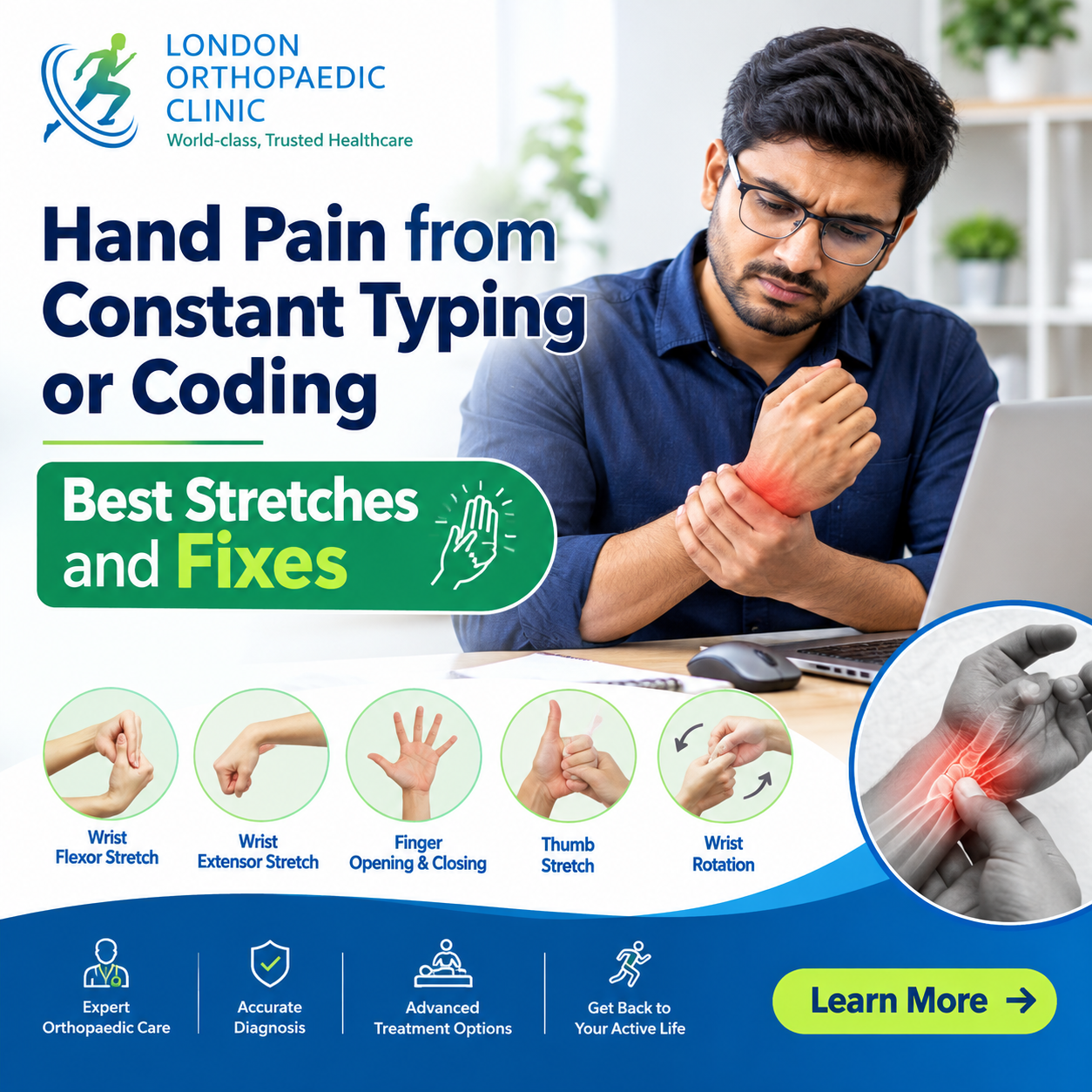
Hand Pain from Constant Typing or Coding: Best Stretches and Fixes
If you spend several hours every day typing, coding, using a mouse, designing, writing emails or working on a computer, you may gradually notice hand pain, wrist pain, finger stiffness or discomfort in the forearm. For many people, the problem starts as mild discomfort after a long working day. Over time, it may become more…