
Expert Orthopaedic Guide by Dr. Vishal Sahni, London Orthopedic Clinic Nagpur
Golfer’s elbow is a very common condition today, especially among people who use their hands and arms repeatedly in daily life. Despite the name, you don’t have to be a golfer to suffer from it. Many working professionals, homemakers, gym-goers, tennis players, and even students can experience this painful elbow problem.
In most cases, mild discomfort improves with rest. But sometimes, golfer’s elbow becomes persistent and starts affecting routine activities like lifting, writing, gripping, or even shaking hands.
So the big question is:
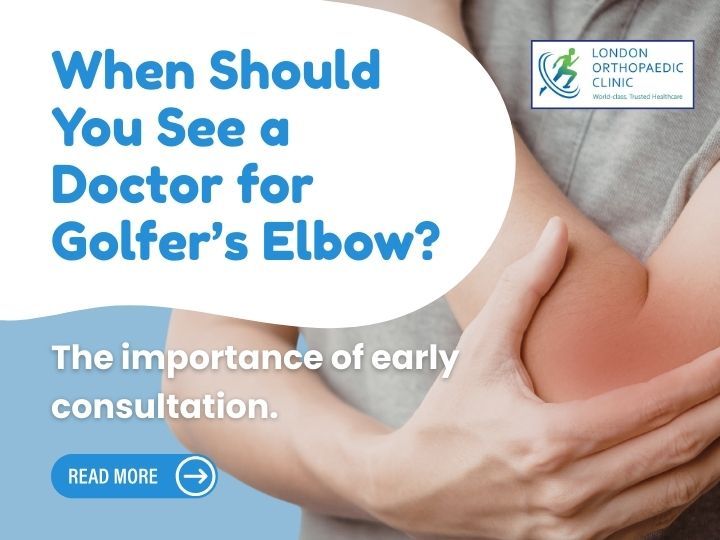
When should you see a doctor for golfer’s elbow?
This detailed guide will help you understand the warning signs, causes, treatment options, and when expert orthopaedic care is necessary.
At London Orthopedic Clinic Nagpur, Dr. Vishal Sahni (MBBS, MS ORTHO, FRCS ORTHO London, MCH ORTHO Liverpool) offers advanced diagnosis and specialised treatment for elbow pain, sports injuries, and tendon disorders.
What Is Golfer’s Elbow?
Golfer’s elbow, medically called medial epicondylitis, is a condition where the tendons on the inner side of your elbow become irritated or inflamed.
These tendons connect the forearm muscles to the elbow joint and help with:
- gripping
- twisting movements
- lifting objects
- wrist flexion
When these tendons are overused, tiny tears develop, leading to pain and weakness.
Where Do You Feel Pain in Golfer’s Elbow?
The most common symptom is:
Pain on the inner side of the elbow
The pain may also spread to:
- forearm
- wrist
- fingers (in some cases)
Many patients describe it as:
- burning pain
- dull ache
- sharp discomfort while lifting
Common Causes of Golfer’s Elbow
Golfer’s elbow is mainly caused by repetitive strain. Some common triggers include:
1. Sports Activities
Even non-golf sports can cause it, such as:
- cricket
- badminton
- tennis
- weight training
- throwing sports
2. Gym and Weightlifting Injuries
Improper technique during:
- bicep curls
- pull-ups
- deadlifts
can overload the elbow tendons.
3. Occupational Overuse
People at risk include:
- plumbers
- carpenters
- electricians
- computer users
- factory workers
4. Household Work
Repeated activities like:
- chopping vegetables
- washing clothes
- lifting buckets
can contribute to tendon strain.
Early Symptoms You Should Not Ignore
Golfer’s elbow often starts slowly. Many patients ignore early discomfort until it becomes severe.
Early signs include:
- mild pain while gripping
- soreness after activity
- stiffness in the morning
- discomfort during wrist movement
If treated early, recovery is faster.
When Should You See a Doctor for Golfer’s Elbow?
Now let’s come to the most important part.
You should consult an orthopaedic elbow specialist like Dr. Vishal Sahni if you experience any of the following warning signs:
1. Pain Lasting More Than 7–10 Days
If elbow pain does not improve even after:
- rest
- basic home care
- avoiding heavy work
then it may not be a simple strain.
Persistent pain indicates tendon injury that needs professional evaluation.
2. Difficulty in Daily Activities
If you struggle with normal tasks like:
- holding a cup
- turning a doorknob
- writing
- lifting grocery bags
- using a mobile phone
it is time to see a doctor.
Golfer’s elbow can seriously affect quality of life.
3. Weak Grip Strength
A major sign of worsening tendon damage is:
Weakness in hand grip
You may notice:
- dropping objects
- inability to hold weights
- pain while shaking hands
An orthopaedic specialist can assess tendon strength properly.
4. Pain That Keeps Returning
Some patients feel temporary relief but pain returns again and again, especially after activity.
Recurring golfer’s elbow suggests:
- incomplete healing
- ongoing tendon overload
- underlying biomechanical issues
Proper treatment prevents chronic elbow problems.
5. Severe Inner Elbow Tenderness
If even light touch causes pain over the inner elbow bone, it may indicate significant tendon inflammation.
A specialist can confirm the diagnosis and rule out other elbow conditions.
6. Pain Radiating to Forearm or Wrist
Golfer’s elbow pain often spreads downward.
If pain travels to:
- forearm muscles
- wrist joint
- fingers
then medical evaluation becomes important to exclude nerve involvement.
7. Elbow Stiffness and Reduced Motion
If you are unable to fully:
- bend your elbow
- straighten your arm
- rotate your wrist comfortably
it could indicate tendon degeneration or joint-related issues.
Early intervention helps restore full movement.
8. Swelling or Warmth Around the Elbow
Although golfer’s elbow usually does not cause large swelling, in some cases you may notice:
- mild swelling
- warmth
- inflammation
These signs need proper clinical assessment.
9. Symptoms After an Injury or Sudden Strain
If pain started suddenly after:
- lifting something heavy
- gym injury
- fall on the arm
do not ignore it.
A tendon tear or ligament injury may require urgent orthopaedic care.
10. No Relief With Physiotherapy or Medication
If you have already tried:
- physiotherapy
- pain relief medicines
- braces
but symptoms continue, then advanced treatment may be needed.
Dr. Vishal Sahni offers specialised elbow care plans based on severity.
Why Early Consultation Is Important
Delaying treatment can lead to:
- chronic tendon degeneration
- long-term weakness
- reduced elbow function
- longer recovery time
- need for surgical intervention in rare cases
Seeing the right elbow specialist early ensures faster healing and prevents complications.
How Is Golfer’s Elbow Diagnosed?
At London Orthopedic Clinic Nagpur, diagnosis includes:
Clinical Examination
Dr. Sahni checks:
- pain location
- grip strength
- tendon tenderness
- movement limitations
Imaging (If Needed)
In persistent cases, tests may include:
- X-ray (to rule out bone problems)
- Ultrasound
- MRI for tendon assessment
Accurate diagnosis is the first step to effective recovery.
Best Treatment Options for Golfer’s Elbow
Treatment depends on severity and duration.
1. Activity Modification
Avoiding painful repetitive movements is essential.
2. Elbow Bracing
A supportive strap reduces tendon strain during daily activities.
3. Physiotherapy for Golfer’s Elbow
Targeted exercises help with:
- tendon healing
- flexibility
- strengthening forearm muscles
4. Advanced Non-Surgical Treatments
For chronic cases, specialised orthopaedic procedures can provide relief without surgery.
5. Surgical Treatment (Only If Required)
Surgery is rarely needed, but may be considered when pain persists for many months despite conservative care.
Dr. Vishal Sahni is highly experienced in advanced elbow procedures and sports injury management.
Why Choose Dr. Vishal Sahni for Golfer’s Elbow Treatment in Nagpur?
Patients trust Dr. Sahni because of:
- International training in orthopaedics
- Expertise in elbow, shoulder, and wrist disorders
- Modern evidence-based treatment approach
- Personalised rehabilitation guidance
- Focus on long-term recovery and return to work/sports
Dr. Vishal Sahni
MBBS, MS ORTHO
FRCS ORTHO (London)
MCH ORTHO (Liverpool)
London Orthopedic Clinic, Nagpur
When to Book an Appointment Immediately?
Book an orthopaedic consultation if:
- pain is persistent
- grip strength is reduced
- symptoms affect daily work
- you want expert non-surgical care
- you need safe return to sports or gym
Ignoring golfer’s elbow can make it a long-term issue.
Early expert care gives the best recovery outcome.
Final Words: Don’t Live With Inner Elbow Pain
Golfer’s elbow may start as a small discomfort, but if left untreated, it can become a chronic and disabling condition.
If you are experiencing inner elbow pain, weakness, or difficulty using your arm normally, it is the right time to consult an experienced orthopaedic elbow specialist.
At London Orthopedic Clinic Nagpur, Dr. Vishal Sahni provides advanced, patient-focused care for golfer’s elbow and all elbow tendon injuries.
Your elbow pain deserves expert attention — not delay.
FAQs – When Should You See a Doctor for Golfer’s Elbow?
1. What is golfer’s elbow?
Golfer’s elbow, also known as medial epicondylitis, is a condition where the tendons on the inner side of the elbow become irritated or damaged due to repetitive strain. It causes pain, weakness, and difficulty in gripping objects.
2. Is golfer’s elbow only seen in golfers?
No. Although it is called golfer’s elbow, it commonly affects people who do repetitive arm and wrist movements such as gym-goers, tennis players, office workers, plumbers, carpenters, and homemakers.
3. What are the early symptoms of golfer’s elbow?
Early symptoms may include mild pain on the inner elbow, stiffness in the morning, discomfort while gripping, and soreness after physical activity.
4. When should I see a doctor for golfer’s elbow pain?
You should consult a doctor if your elbow pain lasts more than 7–10 days, keeps returning, affects daily activities, or does not improve with rest and basic home care.
5. Can golfer’s elbow heal on its own?
Mild cases may improve with rest and activity modification. However, persistent or severe cases require proper diagnosis and treatment from an orthopaedic specialist to prevent long-term damage.
6. What happens if golfer’s elbow is left untreated?
If ignored, golfer’s elbow can become chronic, leading to long-term pain, reduced grip strength, difficulty in arm movement, and slower recovery.
7. How is golfer’s elbow diagnosed?
An orthopaedic doctor diagnoses golfer’s elbow through clinical examination. In some cases, imaging tests like X-rays, ultrasound, or MRI may be advised to assess tendon injury.
8. What are the best non-surgical treatments for golfer’s elbow?
Non-surgical treatment options include rest, elbow braces, physiotherapy, pain management, and advanced orthopaedic procedures for tendon healing.
9. Is physiotherapy important for golfer’s elbow recovery?
Yes. Physiotherapy plays a key role in strengthening the forearm muscles, improving flexibility, reducing pain, and preventing recurrence.
10. Can golfer’s elbow come back after treatment?
Yes, if repetitive strain continues without proper technique or strengthening exercises. Following the doctor’s guidance and rehabilitation plan reduces the chances of recurrence.
11. When is surgery required for golfer’s elbow?
Surgery is rarely needed. It is only considered in chronic cases where symptoms persist for several months despite conservative treatments.
12. Which doctor should I consult for golfer’s elbow in Nagpur?
For expert golfer’s elbow treatment in Nagpur, you can consult Dr. Vishal Sahni, an orthopaedic specialist in shoulder, elbow, and wrist disorders at London Orthopedic Clinic Nagpur.