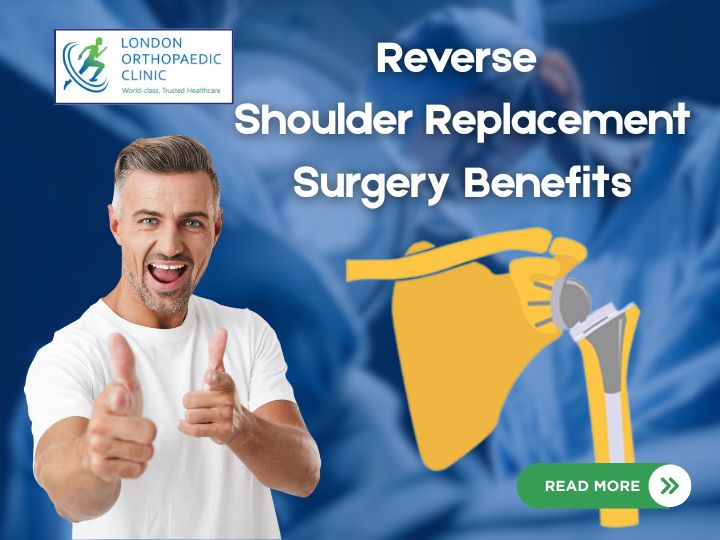
When Shoulder Pain Refuses to Go Away
Shoulder pain is one of the most common yet ignored problems among Indian adults. Many people continue daily activities despite pain, stiffness, or weakness, believing it to be a normal sign of ageing. However, when shoulder pain becomes severe, movement is restricted, and simple tasks like combing hair or lifting a glass feel impossible, it may indicate advanced shoulder joint damage.
In such cases, conventional treatments like physiotherapy, medications, or even routine shoulder surgeries may no longer be effective. This is where Reverse Shoulder Replacement Surgery offers a life-changing solution.
At London Orthopaedic Clinic, Nagpur, advanced shoulder care is led by Dr. Vishal Sahni, a highly trained orthopaedic surgeon with international qualifications and expertise in complex shoulder conditions.
What Is Reverse Shoulder Replacement Surgery?
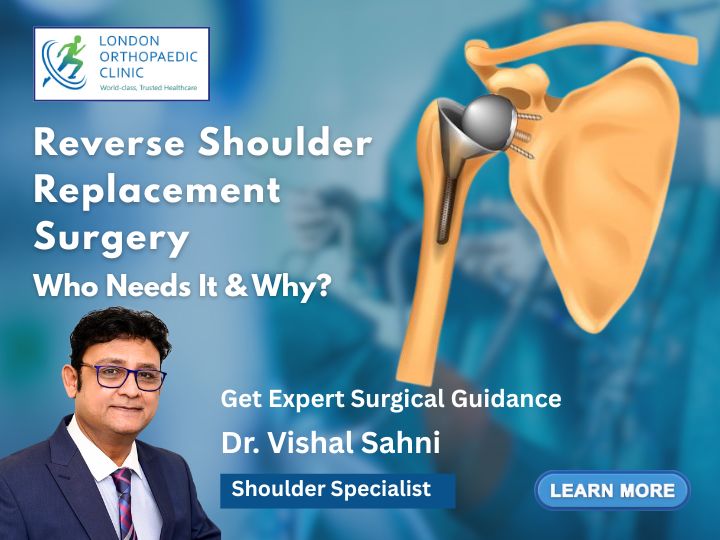
Reverse Shoulder Replacement Surgery, also known as Reverse Shoulder Arthroplasty, is a specialised form of shoulder joint replacement designed for patients where normal shoulder mechanics no longer work.
In a healthy shoulder:
- The ball is at the top of the arm bone
- The socket is part of the shoulder blade
In reverse shoulder replacement, the anatomy is deliberately reversed:
- A ball component is placed on the shoulder blade
- A socket component is placed on the arm bone
This reversal allows the shoulder to function using different muscles, especially the deltoid muscle, instead of relying on damaged rotator cuff muscles.
Why Is Reverse Shoulder Replacement Different from Regular Shoulder Replacement?
A standard shoulder replacement depends heavily on healthy rotator cuff muscles to move the arm. But in many patients, these muscles are torn, weak, or completely non-functional.
Reverse shoulder replacement is specifically designed for:
- Severe rotator cuff damage
- Complex shoulder arthritis
- Failed previous shoulder surgeries
- Certain shoulder fractures in elderly patients
This technique restores shoulder stability and function even when normal anatomy cannot.
Who Needs Reverse Shoulder Replacement Surgery?
Not every patient with shoulder pain needs this procedure. Reverse shoulder replacement is recommended only when specific conditions are present.
1. Massive Rotator Cuff Tears with Weak Shoulder Function
The rotator cuff is a group of muscles that stabilise the shoulder joint. When these muscles are severely torn and cannot be repaired, patients experience:
- Inability to lift the arm
- Constant pain
- Shoulder weakness
- Loss of daily function
Reverse shoulder replacement bypasses the damaged rotator cuff and uses the deltoid muscle to restore movement.
2. Advanced Shoulder Arthritis with Muscle Damage
In some patients, shoulder arthritis occurs along with rotator cuff damage. This condition leads to:
- Grinding pain
- Stiffness
- Night pain
- Progressive disability
Standard joint replacement may fail in such cases. Reverse shoulder replacement provides better pain relief and movement.
3. Failed Previous Shoulder Surgery
Some patients have already undergone shoulder surgery but continue to experience:
- Persistent pain
- Instability
- Limited range of motion
- Implant failure
Reverse shoulder replacement is often the best revision option to restore shoulder function when earlier surgeries do not succeed.
4. Complex Shoulder Fractures in Elderly Patients
In elderly individuals, certain shoulder fractures cannot heal properly due to weak bone quality. Traditional fixation may not give good results.
Reverse shoulder replacement offers:
- Faster pain relief
- Better shoulder stability
- Early return to daily activities
5. Severe Shoulder Deformity or Bone Loss
When shoulder bones are significantly damaged or deformed due to long-standing disease or injury, reverse shoulder replacement helps reconstruct the joint and restore usable movement.
Signs That You May Need Reverse Shoulder Replacement
Patients often ignore symptoms until the condition becomes severe. Warning signs include:
- Constant shoulder pain not relieved by medicines
- Difficulty lifting the arm above shoulder level
- Pain while sleeping on the affected side
- Weakness while holding objects
- Shoulder stiffness and grinding sounds
- Failed response to physiotherapy or injections
If these symptoms persist, consultation with an experienced shoulder specialist is crucial.
How Reverse Shoulder Replacement Surgery Works
The surgery involves carefully removing damaged joint surfaces and replacing them with specially designed implants.
Step-by-Step Overview (Simplified Explanation)
- Removal of damaged bone and cartilage
- Placement of a metal ball on the shoulder blade
- Placement of a socket component on the arm bone
- Secure fixation for long-term stability
- Restoration of joint alignment
This new design allows the deltoid muscle to lift the arm effectively, even without a functioning rotator cuff.
Benefits of Reverse Shoulder Replacement Surgery
Patients who are suitable candidates often experience dramatic improvement.
Major Benefits Include:
- Significant pain relief
- Improved arm lifting ability
- Better shoulder stability
- Improved quality of life
- Ability to perform daily activities independently
- Long-term durability of results
Most patients report improved confidence and comfort in daily life after recovery.
Recovery After Reverse Shoulder Replacement Surgery
Recovery is a gradual and structured process.
Immediate Post-Surgery Phase
- Arm supported in a sling
- Pain managed with medications
- Gentle movements initiated under supervision
Physiotherapy and Rehabilitation
Physiotherapy plays a vital role in recovery. It helps:
- Strengthen the deltoid muscle
- Improve shoulder mobility
- Prevent stiffness
- Restore functional movements
Long-Term Recovery
Most patients:
- Resume basic daily activities within weeks
- Experience continued improvement for several months
- Achieve stable and comfortable shoulder function
Strict adherence to rehabilitation protocols ensures the best outcome.
Is Reverse Shoulder Replacement Safe?
When performed by an experienced orthopaedic shoulder specialist, reverse shoulder replacement is considered safe and reliable.
Modern surgical techniques, improved implant design, and advanced planning tools significantly reduce risks and improve success rates.
Choosing the right surgeon is the most important factor in achieving excellent results.
Why Surgeon Expertise Matters in Reverse Shoulder Replacement
Reverse shoulder replacement is technically demanding and requires:
- Deep understanding of shoulder biomechanics
- Precise surgical planning
- Experience with complex shoulder conditions
Incorrect implant positioning or poor technique can affect outcomes. Hence, specialist expertise is essential.
About Dr. Vishal Sahni – Shoulder Specialist in Nagpur
Dr. Vishal Sahni is a highly respected orthopaedic surgeon known for advanced shoulder, elbow, and wrist treatments.
Qualifications:
- MBBS
- MS Orthopaedics
- FRCS Orthopaedics, London
- MCh Orthopaedics, Liverpool
With international training and exposure to advanced surgical techniques, Dr. Sahni brings global standards of shoulder care to central India.
Advanced Shoulder Care at London Orthopaedic Clinic, Nagpur
London Orthopaedic Clinic, Nagpur is dedicated to providing world-class orthopaedic care with a patient-centric approach.
Key Highlights:
- Advanced shoulder diagnostics
- Modern surgical techniques
- Individualised treatment planning
- Focus on safe recovery and rehabilitation
- Ethical and transparent care
The clinic is recognised for handling complex shoulder cases with precision and compassion.
Life After Reverse Shoulder Replacement
Patients often worry about long-term outcomes. With proper care:
- Pain relief is long-lasting
- Shoulder function remains stable
- Patients regain independence
- Quality of life improves significantly
Regular follow-ups and maintaining shoulder strength help preserve results for many years.
Who Should Not Delay Consultation?
You should not delay seeing a shoulder specialist if:
- Pain affects sleep
- Shoulder movement is severely restricted
- Daily tasks become difficult
- Previous treatments have failed
Early evaluation allows better planning and improved outcomes.
Conclusion: A Second Chance at Pain-Free Shoulder Movement
Reverse Shoulder Replacement Surgery is a revolutionary procedure for patients suffering from severe shoulder damage where conventional treatments no longer work. It restores comfort, confidence, and functional movement, enabling patients to return to an active, independent life.
Under the expert care of Dr. Vishal Sahni at London Orthopaedic Clinic, Nagpur, patients receive advanced, ethical, and internationally informed shoulder treatment.
If shoulder pain has taken control of your life, it may be time to consider a solution that truly works — Reverse Shoulder Replacement Surgery.