
Osteoporosis is diagnosed mainly through a bone mineral density test called a DEXA or DXA scan. Doctors also evaluate a patient’s age, medical history, fracture history, symptoms and risk factors. Blood tests may be recommended to identify underlying causes of bone loss. Early diagnosis helps reduce the risk of fractures and supports better long-term bone health.
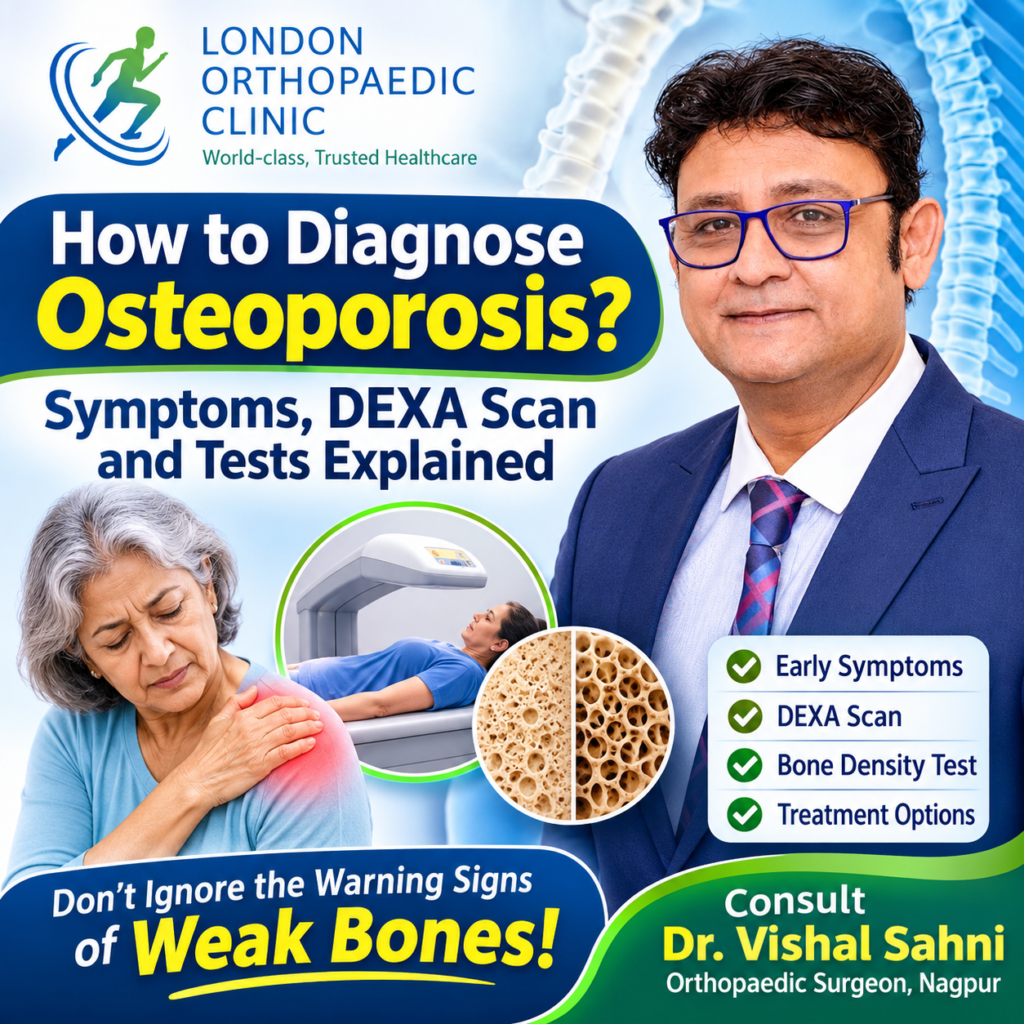
What Is Osteoporosis and Why Is Early Diagnosis Important?
Osteoporosis is a bone condition in which bones gradually become weak, less dense and more likely to break. It develops when the body loses too much bone, produces too little new bone, or both.
Healthy bones continuously renew themselves. However, as people grow older, particularly after menopause in women, bone loss may become faster than bone formation.
This can make everyday activities such as walking, bending, lifting objects or even a minor fall more risky.
Osteoporosis is often called a silent bone disease because many people do not experience noticeable symptoms during its early stages. Sometimes, the first indication is a fracture following a minor injury.
Early osteoporosis diagnosis is important because it allows doctors to assess bone strength, identify fracture risks and recommend suitable treatment before serious complications develop.
What Are the Early Symptoms of Osteoporosis?
One of the biggest challenges with osteoporosis is that it usually does not cause pain in its early stages.
However, certain symptoms may indicate weakening bones.
1. Frequent Bone Fractures
Breaking a bone after a minor fall or simple daily activity can be an important warning sign. Osteoporosis commonly affects the hip, spine and wrist.
2. Persistent Back Pain
Sudden or long-lasting back pain may sometimes occur due to small fractures in the bones of the spine, known as vertebral compression fractures.
3. Loss of Height
Some people gradually become shorter because weakened spinal bones develop small fractures or compression.
4. Hunched Back or Changes in Posture
Repeated spinal compression fractures can cause the upper back to curve forward. This condition is sometimes called a dowager’s hump.
5. Wrist or Hip Fractures
A wrist fracture after a minor fall may sometimes be an early indication of poor bone strength. Hip fractures are another serious complication of osteoporosis.
Important: Having no symptoms does not mean your bones are healthy. People with risk factors may need a bone density assessment even when they feel completely normal.
How Is Osteoporosis Diagnosed?
An orthopaedic doctor or other qualified healthcare professional uses a combination of medical history, physical examination, risk assessment and diagnostic investigations.
The following tests help identify osteoporosis and evaluate bone health.
1. DEXA Scan – The Main Test for Osteoporosis
A DEXA scan, also called a DXA scan, stands for Dual-Energy X-ray Absorptiometry.
It is the standard bone density test used to diagnose osteoporosis. It measures bone mineral density (BMD), usually at the hip and lower spine.
How Is a DEXA Scan Performed?
The patient lies comfortably on a scanning table while a machine passes low-dose X-rays over the body.
The machine measures the amount of mineral present in the bones and generates a bone density report.
The procedure is:
- Painless and non-invasive.
- Usually completed within a short time.
- Associated with a very low radiation exposure.
- Useful for identifying reduced bone density.
What Does the T-Score Mean?
The DEXA scan report usually includes a T-score. It compares your bone density with that of a healthy young adult.
The commonly used interpretation for postmenopausal women and men aged 50 years or older is:
- Normal: T-score of -1.0 or above.
- Osteopenia: T-score between -1.0 and -2.5.
- Osteoporosis: T-score of -2.5 or below.
A lower T-score indicates lower bone density. However, doctors also consider fracture history and other clinical factors before deciding on treatment.
2. Blood Tests for Osteoporosis
Blood tests cannot directly confirm osteoporosis, but they help doctors investigate possible reasons for bone loss and identify other medical conditions.
Depending on the patient’s condition, a doctor may recommend:
- Vitamin D test: Checks vitamin D levels, which are important for calcium absorption and bone health.
- Calcium test: Measures calcium levels in the blood.
- Thyroid function test: Helps identify thyroid problems that may affect bone health.
- Parathyroid hormone (PTH): Evaluates hormonal conditions affecting calcium balance.
- Kidney function test: Checks whether kidney problems may be affecting bone metabolism.
- Alkaline phosphatase: Helps assess certain bone and liver conditions.
These investigations are selected according to the patient’s medical history and examination findings.
3. FRAX – Fracture Risk Assessment
FRAX is a fracture risk assessment tool that estimates the probability of a person experiencing a major osteoporosis-related fracture within the next 10 years.
It considers factors such as:
- Age and sex.
- Body mass index.
- Previous fractures.
- Family history of hip fracture.
- Smoking and alcohol use.
- Certain medical conditions and medications.
- Bone mineral density, when available.
FRAX helps doctors understand fracture risk and decide whether further bone density testing or treatment should be considered.
4. X-Ray for Detecting Osteoporosis-Related Fractures
A normal X-ray is not the best test for detecting early osteoporosis because significant bone loss may occur before it becomes clearly visible on an X-ray.
However, X-rays are useful when doctors suspect a fracture, spinal compression or changes in bone structure.
If a patient experiences sudden back pain after a minor fall, spinal imaging may be necessary to check for vertebral fractures.
5. Other Bone Density Tests
In selected cases, doctors may recommend additional investigations, such as peripheral bone density measurements or quantitative imaging techniques.
However, these tests are not interchangeable with a central DEXA scan for routine diagnosis. The appropriate investigation depends on the patient’s symptoms and clinical risk.
Who Should Get an Osteoporosis Test?
A bone density test may be recommended for people with an increased risk of bone loss or fractures.
You should discuss osteoporosis screening with your doctor if you:
- Are a woman aged 65 years or above.
- Are a postmenopausal woman younger than 65 with additional risk factors.
- Have experienced a fracture after a minor fall.
- Have a family history of osteoporosis or hip fractures.
- Have been taking steroid medicines for a long period.
- Have a low body weight or nutritional deficiencies.
- Have certain hormonal or medical conditions affecting bone health.
- Have experienced unexplained height loss or spinal curvature.
Screening recommendations for men should be individualised according to age, medical history and risk factors.
Osteoporosis Treatment: Why Early Diagnosis Matters
Osteoporosis treatment aims to reduce bone loss, improve bone strength where possible and prevent future fractures.
Treatment depends on the DEXA scan results, age, fracture history, overall health and underlying causes.
1. Medicines for Osteoporosis
Doctors may prescribe medicines that slow bone breakdown or help build new bone, depending on the patient’s condition and fracture risk.
2. Calcium and Vitamin D
Adequate calcium and vitamin D are important for maintaining healthy bones. Supplements should be taken when recommended by a healthcare professional.
3. Exercise and Physiotherapy
Appropriate weight-bearing exercises, strength training and balance exercises can help maintain muscle strength, improve mobility and reduce fall risk.
A physiotherapist can guide patients regarding safe exercises according to their bone health and physical condition.
4. Preventing Falls and Fractures
Simple changes such as wearing proper footwear, improving home lighting, removing slippery obstacles and using support when needed can reduce the risk of falls.
Why Consult an Experienced Orthopaedic Surgeon?
Osteoporosis can affect different bones and increase the risk of fractures, including injuries involving the shoulder, elbow, wrist and hip.
When a patient develops a fracture or experiences persistent joint and bone-related problems, proper orthopaedic assessment becomes important.
Dr. Vishal Sahni is an experienced orthopaedic surgeon specialising in shoulder, elbow and wrist conditions.
His qualifications include:
- MBBS
- MS ORTHO
- FRCS ORTHO (London)
- MCh ORTHO (Liverpool)
At London Orthopaedic Clinic, Nagpur, patients can consult for shoulder injuries, rotator cuff tears, frozen shoulder, shoulder arthritis, shoulder replacement surgery, tennis elbow, wrist pain and sports injuries.
Depending on the patient’s condition, treatment may include medication, physiotherapy, fracture management or surgical intervention.
Patients searching for a shoulder specialist in Nagpur, rotator cuff tear treatment in Nagpur, frozen shoulder treatment in Nagpur or wrist pain treatment in Nagpur can consult the clinic for an appropriate assessment.
The clinic also welcomes patients travelling from different parts of Central India.
Orthopaedic Consultation in Nagpur and Central India
London Orthopaedic Clinic provides specialist orthopaedic consultation for patients from Nagpur and surrounding regions.
Patients from Jabalpur, Bhopal, Raipur, Sivani, Chhindwara, Indore, Wardha, Amravati, Chandrapur and Yavatmal, as well as other locations across Maharashtra, Madhya Pradesh and Chhattisgarh, can contact the clinic for consultation.
Patients travelling from Pune and Mumbai can also enquire about appointments.
Online consultation is available, making it convenient for patients who cannot immediately travel to Nagpur. The doctor can advise whether an in-person examination or further investigation is required.
Conclusion: Do Not Ignore the Warning Signs of Weak Bones
Osteoporosis can develop silently, but its complications can seriously affect mobility and quality of life. A DEXA scan, appropriate blood investigations and clinical risk assessment help doctors identify bone loss and plan suitable treatment.
If you have experienced a minor-fracture injury, persistent back pain, height loss or have risk factors for osteoporosis, consult a qualified doctor rather than waiting for a serious fracture.
For expert orthopaedic consultation regarding shoulder, elbow and wrist conditions, contact Dr. Vishal Sahni at London Orthopaedic Clinic, Nagpur.
Book Your Orthopaedic Consultation
Dr. Vishal Sahni
MBBS, MS ORTHO, FRCS ORTHO (London), MCh ORTHO (Liverpool)
London Orthopaedic Clinic
Address: Ground Floor, Berar House, Mehadia Square, Dhantoli, Nagpur, Maharashtra 440012, India.
Mobile / WhatsApp: +91 9529552938
Website: https://londonorthopaedicclinicngp.com/
Online Consultation Available.
Get Directions to London Orthopaedic Clinic
Frequently Asked Questions (FAQs)
1. How is osteoporosis diagnosed?
Osteoporosis is mainly diagnosed through a DEXA scan, also known as a bone mineral density test. Doctors evaluate bone density, medical history, previous fractures and risk factors. Blood tests may also be recommended to identify vitamin D deficiency, calcium imbalance or other medical conditions affecting bone health.
2. Which is the best test to detect osteoporosis?
A DEXA scan is considered the standard test for diagnosing osteoporosis. It measures bone mineral density, usually at the hip and spine. The results help doctors identify normal bone density, osteopenia or osteoporosis and assess the need for treatment.
3. What are the early warning signs of osteoporosis?
Osteoporosis usually does not cause symptoms in its early stages. However, unexplained back pain, loss of height, a hunched posture and fractures after minor falls may indicate weakening bones. A bone density test can help detect osteoporosis before serious complications develop.
4. Can osteoporosis be detected through a blood test?
No. A blood test alone cannot confirm osteoporosis. However, doctors may recommend vitamin D, calcium, thyroid, kidney function and parathyroid hormone tests to identify conditions that contribute to bone loss. A DEXA scan is generally used to measure bone mineral density.
5. What is a normal T-score in a DEXA scan?
A T-score of -1.0 or above is considered normal. A score between -1.0 and -2.5 indicates osteopenia, while a score of -2.5 or below indicates osteoporosis under standard diagnostic criteria for postmenopausal women and men aged 50 or older. Doctors also consider fracture history and other clinical factors.
6. At what age should a person get an osteoporosis test?
Women aged 65 years and above should generally undergo osteoporosis screening. Younger postmenopausal women with additional risk factors may also need testing. For men and younger adults, doctors recommend screening based on individual medical history, fracture risk and other health conditions.
7. Can osteoporosis cause shoulder, elbow and wrist pain?
Osteoporosis itself is usually painless. However, weakened bones can increase the risk of fractures involving the shoulder, upper arm and wrist. Persistent shoulder, elbow or wrist pain should be properly examined because it may also be caused by arthritis, tendon injuries or other orthopaedic conditions.
8. Can osteoporosis cause wrist fractures?
Yes. Osteoporosis can increase the risk of wrist fractures, particularly after a minor fall. A wrist fracture may sometimes be an early warning sign of poor bone strength. Patients experiencing wrist injuries should undergo proper assessment and discuss whether a bone density evaluation is necessary.
9. Is osteoporosis completely curable?
Osteoporosis is generally a long-term condition, but appropriate treatment can help reduce bone loss, improve bone strength in some patients and lower the risk of fractures. Treatment may include prescribed medicines, adequate calcium and vitamin D, exercise and fall prevention measures.
10. Which doctor should I consult for osteoporosis and bone-related problems in Nagpur?
You should consult a qualified doctor experienced in evaluating bone health and fracture risk. An orthopaedic specialist can assess bone-related injuries and fractures and recommend appropriate investigations or further medical evaluation. For shoulder, elbow and wrist conditions, patients can consult Dr. Vishal Sahni at London Orthopaedic Clinic, Nagpur.
11. Who is Dr. Vishal Sahni at London Orthopaedic Clinic, Nagpur?
Dr. Vishal Sahni is an orthopaedic surgeon specialising in shoulder, elbow and wrist treatments and surgery. He provides consultation for conditions such as shoulder injuries, rotator cuff tears, frozen shoulder, shoulder arthritis, tennis elbow, wrist pain and sports injuries at London Orthopaedic Clinic, Nagpur.
12. What are the educational qualifications of Dr. Vishal Sahni?
Dr. Vishal Sahni holds the following medical qualifications:
- MBBS
- MS ORTHO
- FRCS ORTHO (London)
- MCh ORTHO (Liverpool)
His specialist orthopaedic practice focuses on shoulder, elbow and wrist conditions, including advanced surgical management.
13. How much experience does Dr. Vishal Sahni have in orthopaedic surgery?
Dr. Vishal Sahni has over 25 years of practice experience in the UK and India, according to the clinic’s published professional profile. His clinical focus includes shoulder, elbow and wrist conditions, advanced surgical procedures and management of complex orthopaedic problems.
14. What types of shoulder and orthopaedic surgeries does Dr. Vishal Sahni perform?
Dr. Vishal Sahni specialises in shoulder, elbow and wrist procedures. Depending on the patient’s diagnosis, treatment may include arthroscopic shoulder surgery, rotator cuff repair, shoulder replacement surgery, shoulder dislocation management and selected elbow and wrist procedures. The appropriate surgery depends on individual clinical assessment.
15. How can I book an appointment with Dr. Vishal Sahni in Nagpur?
Patients can contact London Orthopaedic Clinic directly to enquire about appointments with Dr. Vishal Sahni.
Clinic: London Orthopaedic Clinic, Nagpur
Mobile / WhatsApp: +91 9529552938
Address: Ground Floor, Berar House, Mehadia Square, Dhantoli, Nagpur, Maharashtra 440012, India.
Website: https://londonorthopaedicclinicngp.com/
16. Is online consultation available with Dr. Vishal Sahni?
Yes, online consultation is available at London Orthopaedic Clinic. Patients who cannot immediately travel to Nagpur can enquire about an online consultation. They can discuss their symptoms and share relevant medical reports and investigation results. The doctor can advise whether an in-person examination or further tests are required.
17. Can patients from Jabalpur, Bhopal and Raipur consult Dr. Vishal Sahni?
Yes. Patients travelling from Jabalpur and Bhopal in Madhya Pradesh and Raipur in Chhattisgarh can contact London Orthopaedic Clinic, Nagpur, for orthopaedic consultation. Online consultation is also available for patients who cannot immediately visit the clinic.
18. Does London Orthopaedic Clinic provide consultation for patients from Chhindwara, Sivani and Indore?
Yes. Patients from Chhindwara, Sivani (Seoni) and Indore can enquire about appointments with Dr. Vishal Sahni. The clinic provides specialist consultation for shoulder, elbow and wrist conditions. Patients can contact the clinic to discuss their symptoms and plan their visit to Nagpur.
19. Can patients from Wardha, Amravati, Chandrapur and Yavatmal visit London Orthopaedic Clinic?
Yes. Patients from Wardha, Amravati, Chandrapur and Yavatmal in Maharashtra can visit London Orthopaedic Clinic in Dhantoli, Nagpur. The clinic provides consultation for shoulder injuries, frozen shoulder, rotator cuff tears, tennis elbow, wrist pain and other upper-limb conditions.
20. Does Dr. Vishal Sahni accept patients from Pune, Mumbai and other parts of Central India?
Patients from Pune, Mumbai and other cities across Maharashtra, Madhya Pradesh and Chhattisgarh can enquire about specialist orthopaedic consultation at London Orthopaedic Clinic, Nagpur. The clinic also offers online consultation. Patients from different parts of Central India can contact the clinic to understand the consultation process and plan their treatment.