
Shoulder dislocation is one of the most common joint injuries seen in orthopedic practice. While a first-time shoulder dislocation can be painful and alarming, many patients are surprised to learn that once the shoulder has dislocated, it may become more likely to happen again.
Repeated shoulder dislocations are not just an inconvenience. They can lead to permanent damage inside the shoulder joint, increase the risk of arthritis, weaken surrounding muscles and ligaments, and significantly affect daily activities and sports performance.

If you have experienced shoulder instability or your shoulder keeps slipping out of place, understanding the risks and seeking timely treatment can help prevent long-term complications.
At London Orthopaedic Clinic Nagpur, Dr. Vishal Sahni, a highly experienced shoulder specialist in Nagpur, regularly treats patients with recurrent shoulder instability, sports-related shoulder injuries, ligament tears, and complex shoulder conditions using advanced diagnostic and surgical techniques.
What Is a Shoulder Dislocation?
The shoulder is the most mobile joint in the human body. It allows the arm to move in multiple directions, making everyday activities possible.
However, this flexibility also makes the shoulder vulnerable to instability.
A shoulder dislocation occurs when the ball-shaped top of the upper arm bone (humerus) comes out of the shoulder socket (glenoid).
The injury commonly happens due to:
- Sports injuries
- Falls
- Road traffic accidents
- Sudden twisting movements
- Direct impact on the shoulder
After a first dislocation, the ligaments, cartilage, and supporting tissues may become damaged. As a result, the shoulder may become unstable and prone to repeated dislocations.
This condition is known as recurrent shoulder instability.
Why Do Repeated Shoulder Dislocations Occur?
Many patients assume that once the shoulder is put back into place, the problem is solved. Unfortunately, that is not always true.
When the shoulder dislocates, several important structures may be injured.
These include:
Damage to Shoulder Ligaments
Ligaments help hold the shoulder joint together. A dislocation can stretch or tear these structures, making future dislocations more likely.
Labral Tears
The labrum is a ring of cartilage that helps deepen the shoulder socket.
A common injury called a Bankart lesion occurs when the labrum tears during a shoulder dislocation.
Without proper treatment, the shoulder remains unstable.

Bone Loss
Repeated dislocations can damage the bones of the shoulder joint.
Every time the shoulder slips out, the socket or humeral head may lose bone, making future dislocations easier and treatment more complex.
Muscle Weakness
Shoulder instability often causes weakness in the surrounding muscles.
Poor muscle control increases the chance of another dislocation.
What Are the Risks of Repeated Shoulder Dislocations?
Ignoring recurrent shoulder instability can lead to serious long-term problems.
Chronic Shoulder Instability
The biggest risk is persistent instability.
Patients often describe:
- Feeling that the shoulder is loose
- Fear of certain movements
- Clicking or catching sensations
- The shoulder slipping partially out of place
Even simple tasks like reaching overhead may become difficult.
This is why early shoulder dislocation treatment Nagpur is important.
Increased Risk of Rotator Cuff Tears
The rotator cuff consists of muscles and tendons that stabilize the shoulder.
Repeated dislocations place excessive stress on these structures.
Over time, patients may develop:
- Partial rotator cuff tears
- Complete tendon tears
- Chronic shoulder pain
- Reduced arm strength
Patients requiring rotator cuff tear treatment Nagpur often have a history of untreated shoulder instability.
Development of Shoulder Arthritis
Repeated damage to cartilage inside the joint accelerates wear and tear.
This may eventually lead to:
- Shoulder arthritis
- Joint stiffness
- Chronic pain
- Reduced range of motion
Many patients later require advanced shoulder arthritis treatment Nagpur to manage symptoms and restore function.
Bone Damage Becomes Worse
Each dislocation episode can remove additional bone from the shoulder socket.
Severe bone loss can:
- Increase instability
- Make surgery more complicated
- Reduce treatment success rates
Early intervention often prevents extensive bone damage.
Loss of Sports Performance
Athletes frequently experience shoulder dislocations during:
- Cricket
- Badminton
- Volleyball
- Wrestling
- Gym workouts
- Contact sports
Repeated instability reduces confidence and performance.
A skilled sports injury doctor Nagpur can help athletes return safely to their sport while reducing the risk of future injuries.
Permanent Shoulder Weakness
As instability continues, muscles surrounding the shoulder become less effective.
Patients may notice:
- Difficulty lifting objects
- Reduced endurance
- Weakness during exercise
- Problems carrying bags
Untreated instability can eventually affect quality of life.
Symptoms That Suggest Recurrent Shoulder Instability
Many people do not realise they have chronic instability until multiple dislocations occur.
Common warning signs include:
- Shoulder repeatedly popping out
- Feeling of looseness in the shoulder
- Pain during overhead activities
- Clicking sounds inside the joint
- Fear of moving the arm in certain directions
- Weakness in the affected arm
- Recurrent shoulder pain
If these symptoms are present, consultation with a shoulder joint specialist Nagpur is recommended.
Who Is at Higher Risk?
Certain individuals have a greater chance of repeated shoulder dislocations.
Young Adults
Patients under 30 years of age have a significantly higher risk of recurrent instability after a first dislocation.
Athletes
Sports involving throwing, tackling, or overhead movements increase risk.
Individuals With Ligament Laxity
Some people naturally have looser ligaments, making their joints more unstable.
Patients Who Delay Treatment
Ignoring symptoms allows damage to progress and instability to worsen.
How Is Recurrent Shoulder Instability Diagnosed?
Accurate diagnosis is essential for successful treatment.
Dr. Vishal Sahni performs a detailed evaluation that may include:
Clinical Examination
Assessment of:
- Shoulder stability
- Range of motion
- Strength
- Ligament integrity
X-Rays
X-rays help identify:
- Bone damage
- Joint alignment
- Previous fractures
MRI Scan
MRI provides detailed information about:
- Labral tears
- Ligament injuries
- Rotator cuff damage
CT Scan
CT scans are useful when significant bone loss is suspected.
At a leading orthopedic clinic in Nagpur, advanced imaging helps create a personalised treatment plan.
Non-Surgical Treatment Options
Not every patient requires surgery immediately.
Conservative treatment may include:
Activity Modification
Avoiding movements that trigger instability.
Physiotherapy
Strengthening exercises improve muscle control and shoulder stability.
Pain Management
Medications may help reduce discomfort during recovery.
Sports Rehabilitation
Athletes undergo specialised rehabilitation programs to safely return to sports.
However, non-surgical treatment may not be sufficient for patients experiencing repeated dislocations.
When Is Surgery Needed?
Surgery may be recommended when:
- The shoulder dislocates repeatedly
- MRI shows significant ligament tears
- Bone loss is present
- Sports activities are affected
- Conservative treatment fails
Modern surgical techniques provide excellent outcomes when performed by an experienced shoulder surgeon in Nagpur.
Arthroscopic Shoulder Surgery for Recurrent Dislocations
One of the most effective treatments for recurrent instability is arthroscopic shoulder surgery Nagpur.
This minimally invasive procedure uses small incisions and a high-definition camera to repair damaged structures inside the shoulder.
Benefits include:
- Smaller scars
- Less pain
- Faster recovery
- Improved shoulder stability
- Lower risk of future dislocations
Many patients return to work and sports significantly sooner compared to traditional open surgery.
Shoulder Ligament Repair Surgery
When ligaments or the labrum are torn, shoulder ligament repair surgery Nagpur may be required.
The procedure restores stability by repairing damaged tissues and reattaching them to the bone.
This helps prevent future dislocations and improves shoulder function.
Can Repeated Dislocations Lead to Shoulder Replacement Surgery?
In severe cases, long-term instability can cause advanced arthritis and joint damage.
When conservative treatments no longer provide relief, shoulder replacement surgery Nagpur may be considered.
Some patients with severe arthritis and rotator cuff damage may benefit from reverse shoulder replacement surgery Nagpur.
Fortunately, timely treatment of shoulder instability often prevents the need for such major procedures.
Recovery After Treatment
Recovery depends on the severity of the condition and the treatment performed.
Most rehabilitation programs focus on:
Phase 1: Pain Control
Reducing inflammation and protecting repaired tissues.
Phase 2: Restoring Movement
Gentle exercises improve flexibility.
Phase 3: Strength Building
Targeted exercises strengthen shoulder muscles.
Phase 4: Return to Activities
Gradual return to work, sports, and daily activities.
Following medical advice is essential for long-term success.
Why Early Treatment Matters
Many patients continue living with recurrent dislocations because they believe the condition is harmless.
Unfortunately, every dislocation episode increases the risk of:
- Bone loss
- Arthritis
- Rotator cuff tears
- Chronic pain
- Reduced shoulder function
Early treatment often leads to:
- Better outcomes
- Faster recovery
- Less joint damage
- Lower surgery complexity
- Improved quality of life
Comprehensive Shoulder, Elbow and Wrist Care in Nagpur
Patients suffering from shoulder instability often experience other upper limb conditions as well.
Dr. Vishal Sahni provides specialised treatment for:
- Shoulder injuries
- Rotator cuff tears
- Frozen shoulder
- Shoulder arthritis
- Sports injuries
- Tennis elbow
- Wrist pain
- Carpal tunnel syndrome
Whether you require frozen shoulder treatment Nagpur, tennis elbow treatment Nagpur, elbow pain doctor Nagpur consultation, wrist pain treatment Nagpur, or carpal tunnel treatment Nagpur, comprehensive care is available under one roof.
As an experienced upper limb surgeon Nagpur, Dr. Vishal Sahni focuses exclusively on shoulder, elbow, and wrist conditions.
Why Choose Dr. Vishal Sahni for Shoulder Dislocation Treatment?
When dealing with recurrent shoulder instability, choosing the right specialist can significantly affect treatment outcomes.
Dr. Vishal Sahni is recognised as one of the leading experts in shoulder and upper limb surgery in Central India.
Qualifications
- MBBS
- MS Orthopaedics
- FRCS Ortho (London)
- MCh Ortho (Liverpool)
Areas of Expertise
- Recurrent shoulder dislocations
- Arthroscopic shoulder surgery
- Rotator cuff repair
- Frozen shoulder treatment
- Sports injury management
- Shoulder replacement surgery
- Elbow and wrist disorders
Patients searching for the best doctor for shoulder pain in Nagpur, shoulder pain doctor Nagpur, orthopedic surgeon near me, or best orthopedic doctor in Nagpur often seek expert evaluation to prevent long-term joint damage and restore normal shoulder function.
Conclusion
Repeated shoulder dislocations should never be ignored. While the first dislocation may seem like an isolated injury, recurrent instability can lead to serious complications including ligament damage, rotator cuff tears, arthritis, bone loss, chronic pain, and loss of shoulder function.
The good news is that modern treatment options, including physiotherapy, minimally invasive procedures, and advanced arthroscopic shoulder surgery Nagpur, can successfully restore stability and help patients return to an active lifestyle.
If your shoulder keeps slipping out of place, or if you have experienced more than one shoulder dislocation, consulting an experienced shoulder specialist in Nagpur is the best step toward preventing permanent damage.
Consult Dr. Vishal Sahni – Shoulder & Upper Limb Specialist
London Orthopaedic Clinic Nagpur
Ground Floor, Berar House, Mehadia Square, Dhantoli, Nagpur, Maharashtra 440012, India
Mobile / WhatsApp: +91 95295 52938
Website: https://londonorthopaedicclinicngp.com/
Online Consultation Available
Book your appointment today and get expert evaluation and advanced treatment for shoulder dislocations, shoulder injuries, sports injuries, elbow pain, wrist disorders, and upper limb conditions from one of Central India’s leading orthopedic specialists.
Frequently Asked Questions (FAQs) About Repeated Shoulder Dislocations
1. What is a recurrent shoulder dislocation?
A recurrent shoulder dislocation occurs when the shoulder joint repeatedly slips out of its socket after an initial dislocation. This usually happens because the ligaments, cartilage, or other supporting structures have been damaged and have not healed properly.
2. Why does my shoulder keep dislocating?
Your shoulder may keep dislocating because of torn ligaments, a damaged labrum, weak shoulder muscles, or bone loss caused by previous dislocations. These problems can make the shoulder joint unstable.
3. Can repeated shoulder dislocations cause permanent damage?
Yes. Repeated shoulder dislocations can lead to permanent damage to the cartilage, ligaments, bones, and rotator cuff tendons. Over time, this can increase the risk of shoulder arthritis and chronic pain.
4. How many shoulder dislocations are considered serious?
Even two or more shoulder dislocations should be taken seriously. Recurrent episodes often indicate shoulder instability and may require evaluation by a shoulder specialist.
5. What are the symptoms of chronic shoulder instability?
Common symptoms include repeated shoulder dislocations, a feeling that the shoulder is loose, clicking sounds, pain during movement, weakness, and fear of certain arm positions.
6. Who is at the highest risk of recurrent shoulder dislocations?
Young adults, athletes, individuals involved in contact sports, and people with naturally loose ligaments have a higher risk of repeated shoulder dislocations.
7. Can physiotherapy help prevent shoulder dislocations?
Yes. Physiotherapy helps strengthen the muscles around the shoulder joint and can improve stability. However, severe instability or structural damage may still require surgery.
8. When should I see a shoulder specialist for a dislocated shoulder?
You should consult a shoulder specialist if your shoulder has dislocated more than once, feels unstable, causes persistent pain, or limits your daily activities and sports participation.
9. What tests are used to diagnose recurrent shoulder instability?
Doctors may use physical examination, X-rays, MRI scans, and CT scans to evaluate ligament damage, labral tears, bone loss, and overall shoulder stability.
10. Can a shoulder dislocation heal on its own?
A first-time dislocation may heal with rest and rehabilitation. However, damaged ligaments and cartilage may not fully recover without proper treatment, increasing the risk of future dislocations.
11. What happens if a shoulder dislocation is left untreated?
Untreated shoulder instability can lead to repeated dislocations, rotator cuff tears, arthritis, bone loss, chronic pain, and reduced shoulder function.
12. Is surgery always necessary for recurrent shoulder dislocations?
No. Some patients improve with physiotherapy and rehabilitation. However, surgery is often recommended when dislocations continue to occur or when significant tissue damage is present.
13. What is arthroscopic shoulder surgery?
Arthroscopic shoulder surgery is a minimally invasive procedure performed through small incisions using a camera and specialized instruments to repair damaged ligaments and cartilage.
14. How successful is surgery for recurrent shoulder dislocations?
Modern arthroscopic shoulder stabilization procedures have high success rates and can significantly reduce the risk of future dislocations when combined with proper rehabilitation.
15. How long does recovery take after shoulder stabilization surgery?
Recovery varies from patient to patient. Most individuals can return to routine daily activities within a few weeks, while sports participation may require several months of rehabilitation.
16. Can repeated shoulder dislocations cause arthritis?
Yes. Repeated injury to the shoulder cartilage and joint surfaces can accelerate wear and tear, leading to shoulder arthritis over time.
17. Are athletes more likely to experience shoulder dislocations?
Yes. Sports involving throwing, tackling, overhead movements, or physical contact place extra stress on the shoulder and increase the risk of dislocations.
18. Can a rotator cuff tear occur after a shoulder dislocation?
Yes. Shoulder dislocations can damage the rotator cuff tendons, especially in older adults, leading to pain, weakness, and restricted movement.
19. How can I reduce the risk of another shoulder dislocation?
Following a structured rehabilitation program, strengthening shoulder muscles, avoiding risky movements, and seeking early treatment can help reduce the risk of recurrence.
20. Where can I get expert shoulder dislocation treatment in Nagpur?
Patients experiencing recurrent shoulder dislocations can consult Dr. Vishal Sahni at London Orthopaedic Clinic Nagpur for advanced diagnosis, physiotherapy guidance, arthroscopic shoulder surgery, and comprehensive shoulder care.
-
Orthopaedic Specialist in Nagpur for Arm Weakness and Pain: Causes, Diagnosis & Treatment
Arm pain with weakness can make simple activities such as lifting a bag, combing your hair, dressing, reaching overhead or playing sports difficult. While many people assume the problem is only muscle pain, the actual cause may involve the shoulder joint, rotator cuff, elbow, wrist, nerves or an injury. If you are searching for an…
-
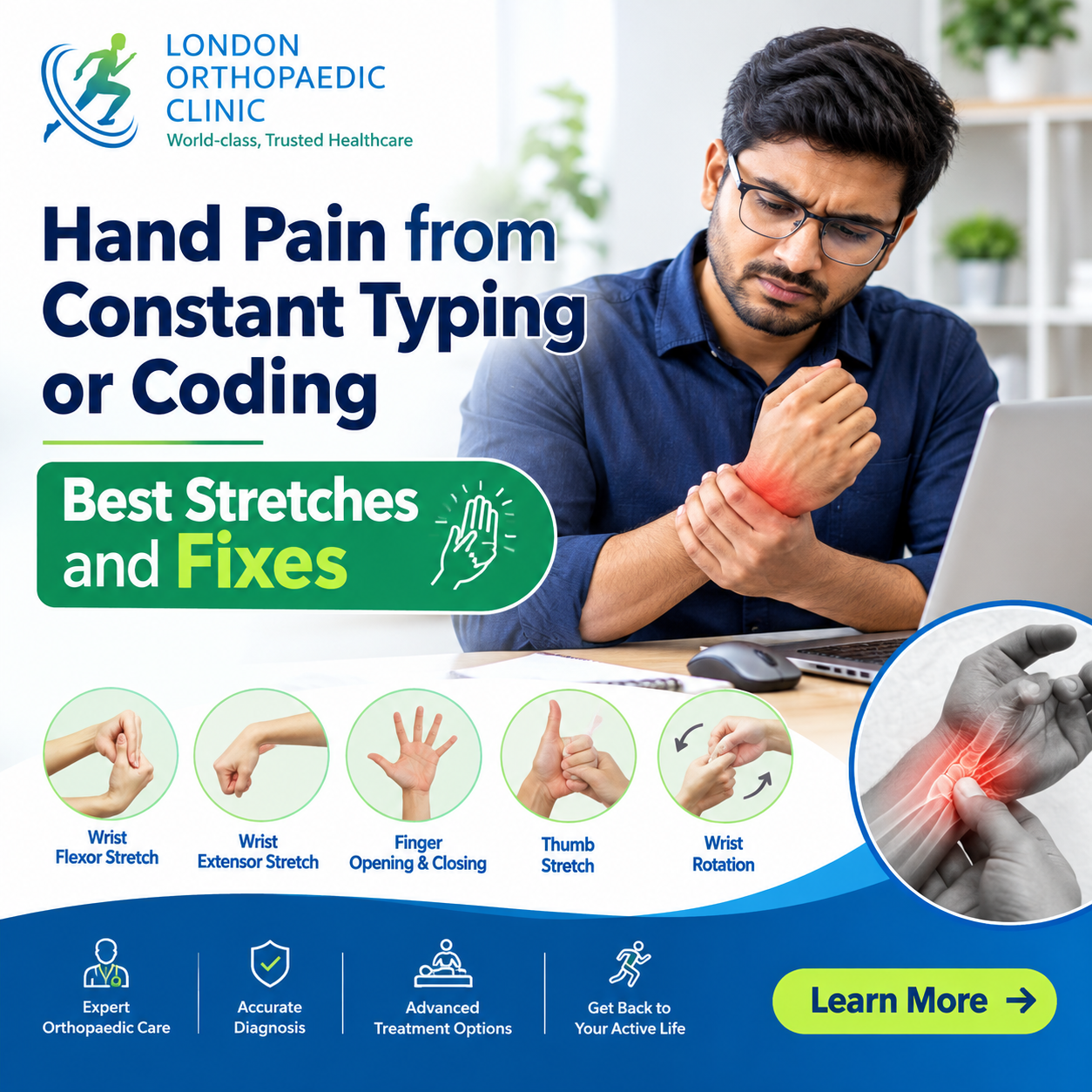
Hand Pain from Constant Typing or Coding: Best Stretches and Fixes
If you spend several hours every day typing, coding, using a mouse, designing, writing emails or working on a computer, you may gradually notice hand pain, wrist pain, finger stiffness or discomfort in the forearm. For many people, the problem starts as mild discomfort after a long working day. Over time, it may become more…
-
Which Doctor Should I Visit for Elbow Pain in Nagpur – Orthopaedic or Physiotherapist?
Elbow pain can make simple daily activities difficult. You may experience pain while lifting a bag, using a computer, playing sports, turning a door handle, or even straightening your arm. Many patients in Nagpur have an important question: “Should I visit an orthopaedic doctor or a physiotherapist for my elbow pain?” The answer depends on…